How to Track Insider Buying: Code P, Cluster Buys, and Form 4 (2026)
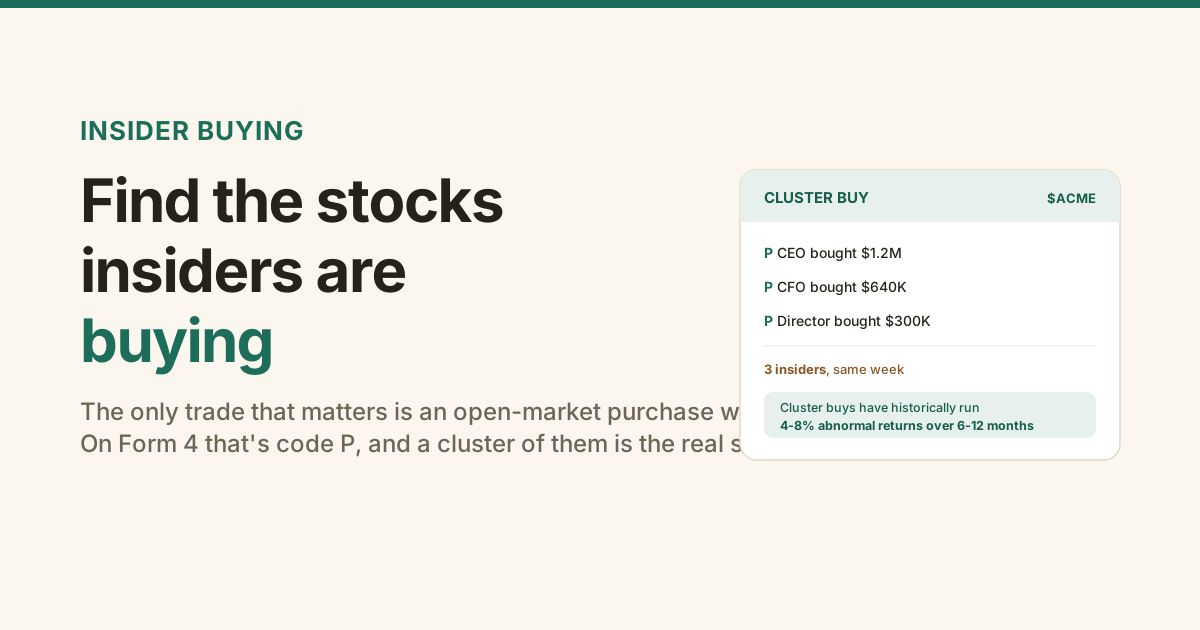
Someone in the C-suite just bought a million dollars of their own company's stock. That's the kind of thing you'd want to know about the day it happens.
The catch is that most "insider trading" headlines are about selling, and most selling means nothing. The real signal is on the other side of the ledger, and it's easy to find once you know which one letter to look for.
Here's how to actually track insider buying: what to keep, what to throw out, and where to watch it happen in real time.
Why insider buying beats insider selling as a signal
An insider can sell for a dozen reasons that have nothing to do with the stock. A house, a divorce, a tax bill, a portfolio that got too concentrated, a plan their lawyer set up last year. None of that is a view on the price.
If you do want to watch the selling side, the earliest signal is the Form 144, the notice an insider files before a sale, not the Form 4 that reports it after the fact.
Buying on the open market is different. Nobody buys more of a stock they already own a pile of unless they think it's going up. There's basically one reason to do it. That's why a purchase is worth reading and most sales aren't.
So the whole game is separating the one kind of trade that carries a real opinion from the pile of routine paperwork around it. That separation is a single field on the form.
What "code P" is, and why it's the only buy that counts
Every transaction on a Form 4 carries a one-letter code, and that code tells you what actually happened. Code P is an open-market purchase — the insider chose to spend cash on shares. Everything else is usually the company's compensation machinery running on autopilot.
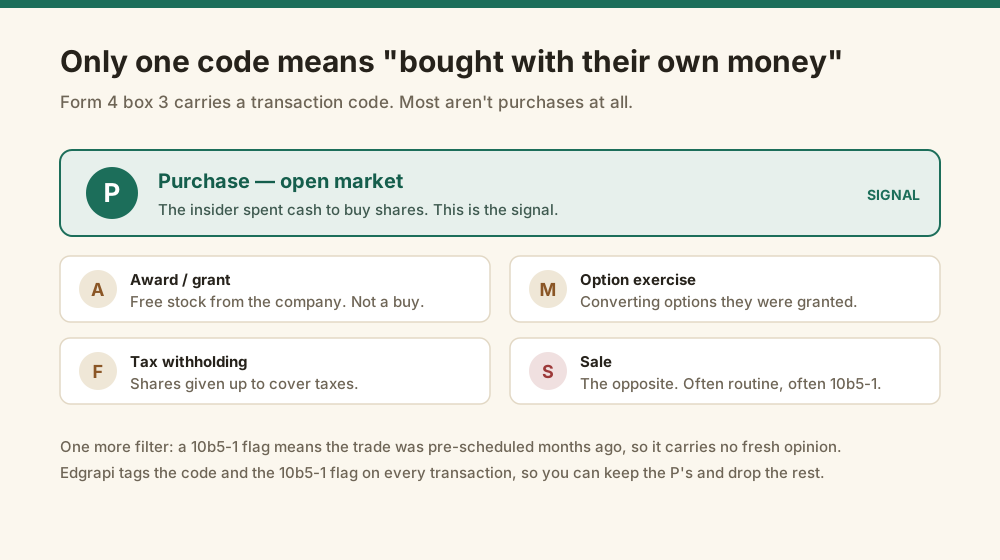
Here's the set you'll run into:
| Code | What happened | Signal? |
|---|---|---|
P | Open-market purchase | Yes. Their own money, their own decision |
A | Stock award or grant | No. That's pay, not conviction |
M | Option exercise or conversion | No. Routine, often near expiry |
F | Shares withheld for taxes | No. The company did it automatically |
S | Sale | Rarely. Check for a 10b5-1 plan first |
If you want the full breakdown of every code and how the filing is structured, the Form 4 guide goes deeper. For tracking buys, code P is the whole thing.
Why cluster buys are the strongest signal of all
One insider buying is a data point. It could be genuine conviction, or it could be a director dropping a token amount to look supportive before a proxy vote. You can't tell from one filing.
A cluster is different. When three or four insiders at the same company — the CEO, the CFO, a couple of directors — all buy within a week or two of each other, you have several people making the same call independently. That's harder to dismiss as optics.
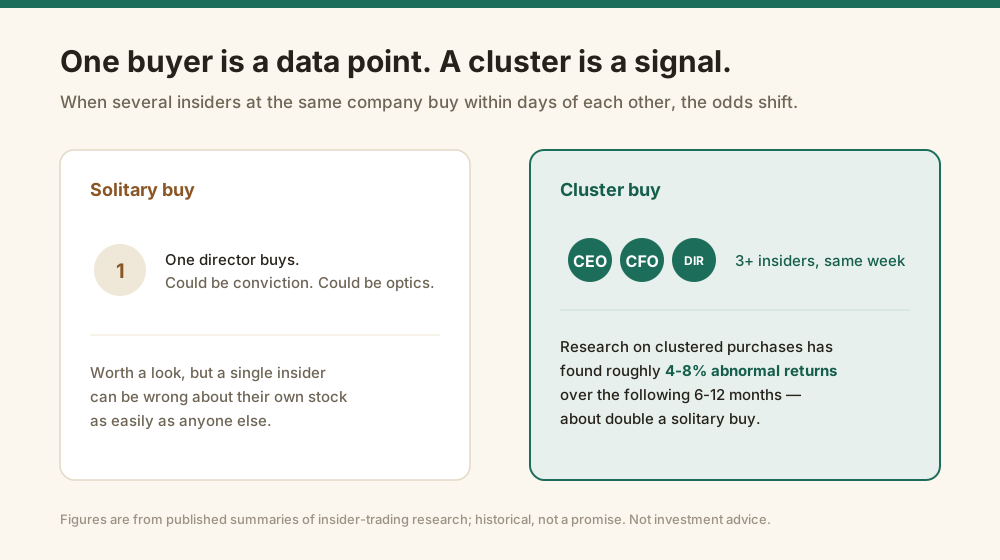
This isn't just intuition. Academic and industry studies of insider trading have repeatedly found that clustered open-market purchases historically preceded meaningfully higher abnormal returns than a lone insider buying — with figures often cited in the range of several percent of excess return over the following 6 to 12 months, roughly double what a solitary purchase tended to show. Those are historical patterns from published research, not a promise about any single stock, and none of this is investment advice.
The practical takeaway: a cluster of P buys is worth ten times the attention of any single filing. It's the thing to actually watch for.
How to track insider buying, step by step
Put the pieces together and the method is four steps. Pull the filings, keep the real buys, cut the noise, and watch for clusters.
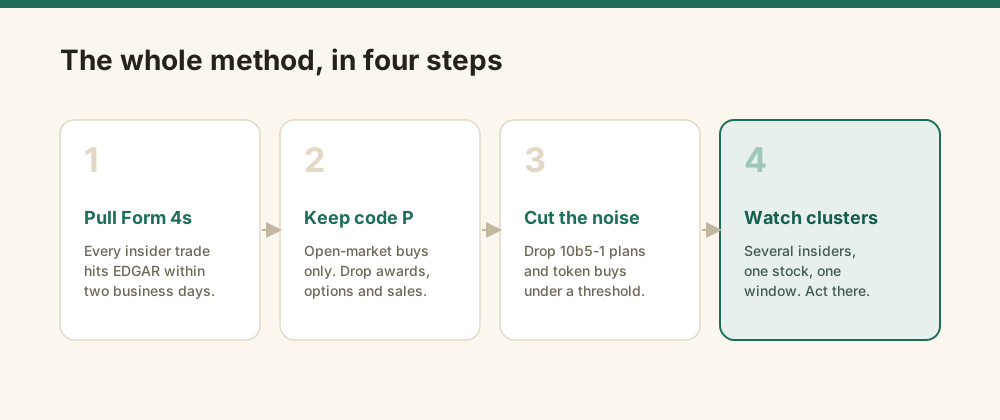
- Pull Form 4 filings. Every insider trade lands on EDGAR within two business days of the trade date, so this is close to a live feed.
- Keep code P. Throw out awards (A), option exercises (M), tax withholding (F), and sales (S). What's left is people buying with their own cash.
- Cut the noise. Drop anything flagged 10b5-1 (a plan set up months ago, so no fresh opinion) and anything below a dollar threshold you care about. A director buying $4,000 of stock isn't news.
- Watch for clusters. Flag any stock where several insiders bought inside a short window. That's where you look harder.
Doing this by hand on EDGAR is slow — you're opening XML filings one at a time. The point of a tool is to run those four steps for you across the whole market.
Where to watch it: a free radar and real-time alerts
Two ways to actually keep an eye on this without reading raw filings all day.
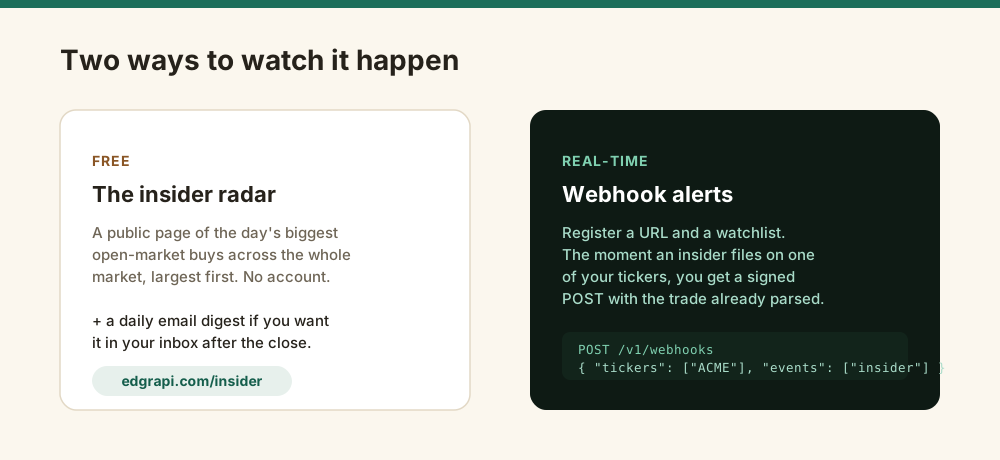
The free radar. Edgrapi's insider page scans the market-wide Form 4 firehose, keeps the code-P open-market buys, and lists the day's biggest ones, largest first — no account needed. Drop your email there and you get a daily digest after the close. It's the fastest way to see what insiders are actually buying today.
Real-time alerts. If you follow specific names, register a webhook with your watchlist and get a signed POST the instant a Form 4 files, the trade already parsed for you:
curl -X POST https://api.edgrapi.com/v1/webhooks \
  -H "X-API-Key: edgr_your_key" \
  -H "Content-Type: application/json" \
  -d '{"url": "https://you.example.com/hook",
       "tickers": ["ACME", "NVDA", "TSLA"],
       "events": ["insider"]}'
The moment any of those companies files a Form 4, your endpoint gets the parsed transaction — insider, relationship, code, shares, price — signed with an X-Edgrapi-Signature header so you know it's really from us. No polling, no reading yesterday's news. You hear about the buy the day it lands.
What to ignore so you don't chase ghosts
Most of what gets reported as "insider activity" is noise, and knowing what to skip saves you more time than any tool. Ignore option exercises flipped the same day. Ignore tax-withholding events. Ignore anything on a 10b5-1 schedule. Ignore token buys that are more optics than conviction. And treat single-insider buys as a maybe, not a signal.
What's left after all that filtering is a short, high-quality list: real open-market purchases, ideally clustered, in real dollar amounts. That's the list worth your attention.
Start with today's biggest buys
You don't need to build anything to begin. Open the radar, see which insiders are buying right now, and drop your email in for the daily digest. When you want alerts on your own names, the webhook docs take about five minutes to wire up.
See today's biggest insider buys →
Edgrapi surfaces public SEC filings for research. It is not investment advice, and past patterns in insider data don't predict future returns.
Frequently asked questions
How do I track which stocks insiders are buying?
Watch Form 4 filings on SEC EDGAR and keep only the ones with transaction code P, an open-market purchase where the insider spent their own cash. Drop awards, option exercises, tax withholding, and pre-scheduled 10b5-1 sales. The strongest signal is a cluster: several insiders at the same company buying within days. Edgrapi's free radar at edgrapi.com/insider surfaces the day's biggest open-market buys across the whole market.
Is insider buying a good signal?
It is the more informative side of insider activity. Insiders sell for many reasons — taxes, diversification, a scheduled plan — but they buy on the open market for essentially one: they think the stock is cheap. Academic research on insider purchases has repeatedly found modest outperformance, and clustered buying by several insiders tends to be stronger than a single purchase. It is a starting point for research, not a guarantee, and not investment advice.
What is a cluster buy?
A cluster buy is when three or more insiders at the same company make open-market purchases within a short window, often the same week or two. Studies of insider trading have found clustered purchases historically preceded larger abnormal returns than a lone insider buying, on the logic that independent decisions pointing the same way carry more information.
Why doesn't insider selling tell you much?
Most Form 4 sales aren't a decision to sell. Many are an option exercise (code M) flipped the same day, shares withheld to cover taxes on a vest (code F), or a sale scheduled months in advance under a 10b5-1 plan. None of those reflect a fresh view on the price. Filter to code P buys and most of the noise disappears.
Is tracking insider trades legal?
Yes. Insiders are required by law to report their trades on Form 4 within two business days, and those filings are public on SEC EDGAR. Reading and acting on public filings is ordinary research. What's illegal is trading on material non-public information, which is a different thing entirely from watching disclosures everyone can see.
How can I get alerted when an insider buys?
For a daily summary, the Edgrapi radar sends an email digest of the biggest open-market buys after the close. For real-time alerts on your own watchlist, register a webhook with POST /v1/webhooks and a list of tickers; you get a signed POST the moment a Form 4 lands, with the trade already parsed. Both start from edgrapi.com/insider.