How to Track Congressional Stock Trades (Free, 2026)
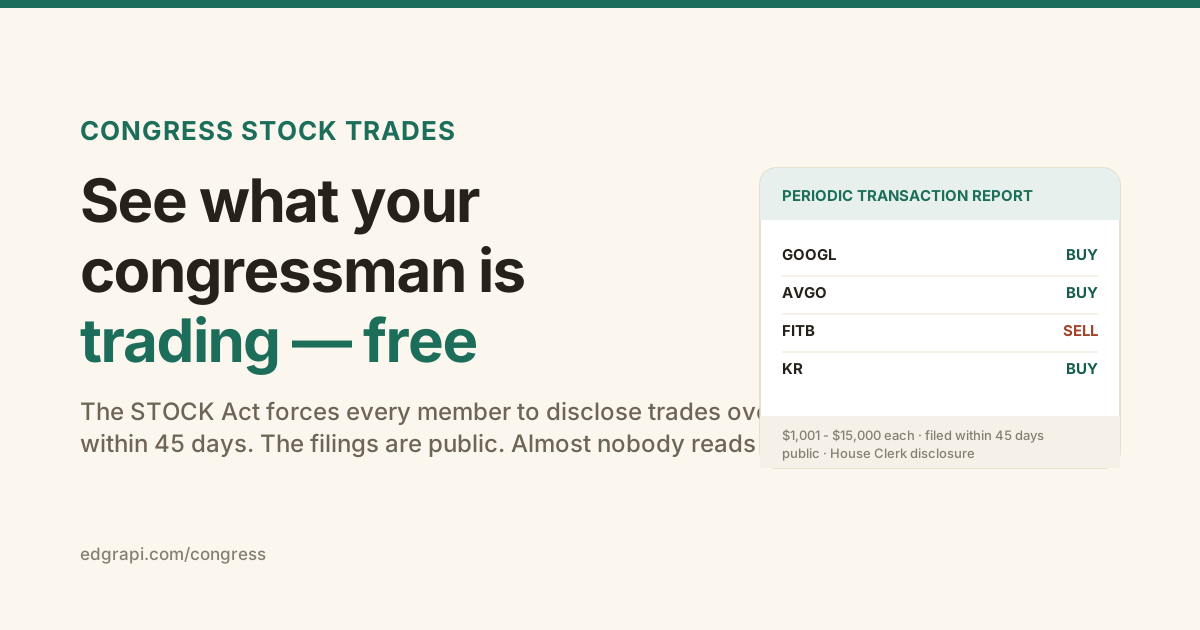
You can see the stocks your congressman bought last month. For free. It's the law.
Members of Congress trade a lot of stock, and a lot of people suspect they're good at it. The trades are public by law. Almost nobody reads them, because the government made the raw data annoying to use.
Here's how to actually track congressional stock trades: where the data lives, the free tools that clean it up, and the one rule that trips up everyone who tries.
What is congressional stock trading, and why can you see it?
Members of Congress are allowed to buy and sell individual stocks, and under the 2012 STOCK Act they must publicly disclose each trade over $1,000 within 45 days. The disclosure is a Periodic Transaction Report (PTR) filed with the House Clerk or Senate. It lists the ticker, whether it was a buy or sale, the date, and a dollar range. That legal requirement is the only reason you can watch what they trade.
The law has a name that says the quiet part out loud: the Stop Trading on Congressional Knowledge Act. Congress passed it in 2012 after reporting showed how much lawmakers traded.
It doesn't ban trading. It just forces disclosure, on the theory that sunlight is the deterrent.
And there's a lot to disclose. In the current Congress, 202 Representatives and 56 Senators own individual stock, and in 2024 alone 113 members made 9,261 trades, according to a Motley Fool analysis of the disclosures. Common Cause put the total value at over $635 million.
That's the raw material. Now you just need to read it.
Is congressional stock trading legal?
Yes. Members of Congress can legally own and trade individual stocks, as long as they don't trade on material non-public information from their work. The STOCK Act made that insider-trading rule explicit and added the disclosure requirement, but it stopped short of a ban. Reading and acting on their public disclosures is completely legal for you too, because you're using information anyone can see.
This is the part people get wrong. Following congressional trades isn't shady. It's public-records research.
The lawmakers themselves are the ones under scrutiny. The open question is whether they use what they learn in briefings, and whether disclosure is enough to stop it.
Congress has been debating a real ban for years. In July 2026, the House passed a bill 232-198 that would bar members, spouses, and dependent children from buying new stocks and require a week's notice before selling, per the Washington Post. It hasn't become law, and it grandfathers existing holdings.
The pressure behind a ban is real. Poll after poll shows most Americans, across both parties, think members of Congress shouldn't trade individual stocks while in office at all. Whether that becomes law, or just more bills that pass one chamber and stall, is the open question.
Until something passes the Senate and gets signed, the trades keep coming, and they stay public.
How do I track congressional stock trades for free?
To track congressional stock trades for free, you have two routes: read the raw disclosures on the official government sites, or use a free tracker that parses them for you. The primary sources are the House Clerk's financial disclosure portal and the Senate's eFD system. Free trackers like Capitol Trades, Quiver Quantitative, and Edgrapi pull those same filings and turn them into a searchable feed of tickers, buys, and sells.
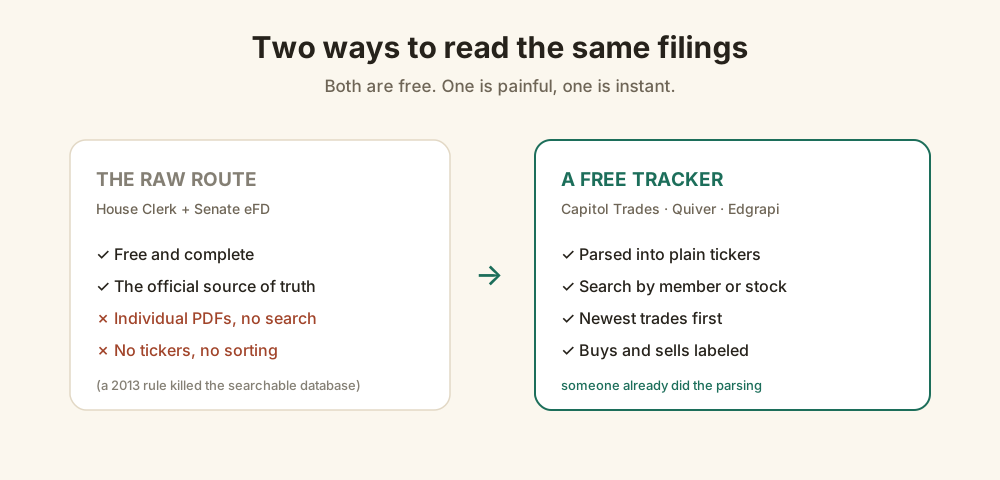
Here's the honest tradeoff between the two.
The raw route is free and complete, but painful. The House publishes every filing, but a 2013 amendment quietly removed the requirement for a searchable, sortable database. So the trades themselves live inside individual PDFs. You can read any one of them, but scanning the whole market by hand is brutal.
The tracker route is free and instant. Someone else already did the parsing. You type a name or a ticker and see the trades laid out.
Four steps, whichever route you pick:
- Pick who to watch. A specific member, or a specific stock you own.
- Pull their recent PTRs. On the House/Senate site by name, or in one search on a tracker.
- Read the trades. Ticker, buy or sell, date, and the dollar range.
- Watch the date. The trade could be up to 45 days old. More on that below.
The name most people search for is Nancy Pelosi. Her family's disclosures get picked apart within hours of hitting the House site, and there's even an ETF built to mirror Democratic members' trades. But the same public filings cover all 535 members, not just the famous ones.
If you want the fast version, Edgrapi's Congress tracker reads the raw House filings and lists the trades newest-first, free, no signup.
What's the best free tool to track Congress trades?
The best free tool depends on what you want. Capitol Trades is the cleanest congress-only interface. Quiver Quantitative adds each politician's calculated returns and deeper government data. Edgrapi is the only free one that shows Congress trades on the same page as what superinvestors and insiders are doing in the stock. The raw House and Senate sites are the free source of truth but hard to browse. Paid tools like Unusual Whales ($60/month) layer on options flow and dark-pool data most retail users don't need.
Here's how the main options compare.
| Tool | Price | Best for |
|---|---|---|
| House Clerk / Senate eFD | Free | The official source. Raw PDFs, no search, no tickers |
| Capitol Trades | Free | The cleanest congress-only feed, search by member or stock |
| Quiver Quantitative | Freemium | Politician returns, backtesting, lobbying and contract data |
| Edgrapi | Free | Congress trades fused with superinvestor and insider activity per stock |
| Unusual Whales | ~$60/mo | Options flow and dark pool layered on the political data |
Pricing checked August 2026 from each tool's own pages. My honest take: start with a free tracker for the feed, and use the raw government site only when you want to verify a specific filing.
How do you read a periodic transaction report?
A periodic transaction report (PTR) is the actual filing a member submits for a batch of trades. Each row lists the asset and its ticker, the owner (the member, spouse, or a joint account), whether it was a purchase or sale, the transaction date, and an amount bracket like "$1,001 - $15,000." Congress reports ranges, not exact dollar figures, so you learn the direction and rough size of a trade, never the precise amount.
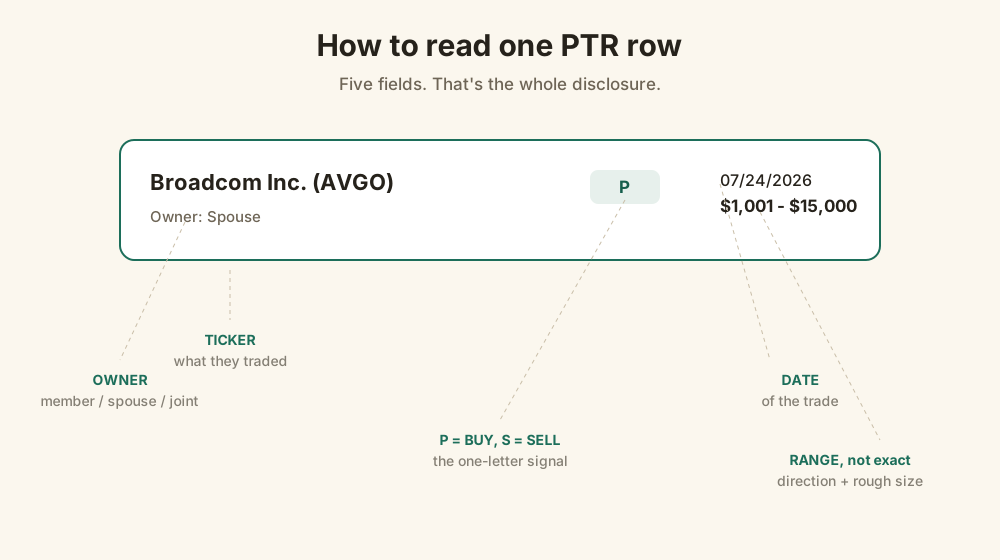
The ranges are wide on purpose. A trade logged as "$1,001 - $15,000" could be either end of that.
The bigger brackets tell you more. A "$1,000,001 - $5,000,000" purchase is a real conviction bet; a small-range trade is closer to noise.
You'll also see a transaction code. "P" is a purchase, "S" is a sale. That one letter is the whole signal.
Here's a real one. A 2026 filing from Rep. David Taylor of Ohio listed purchases of Alphabet (GOOGL), Broadcom (AVGO), and Kroger (KR), plus sales of Fifth Third Bancorp (FITB) and Marathon Petroleum (MPC). Every trade sat in the "$1,001 - $15,000" bracket. Five tickers, a buy or sell on each, dates, and a range. That's the entire filing, and now you can read it too.
Reading one PTR is easy. Reading the hundreds that land every week is why the trackers exist.
Why is Congress's trade data always 45 days late?
Congress's trade data lags because the STOCK Act gives members up to 45 days to file, and the penalty for filing late is tiny. The standard fine for missing the 45-day deadline is just $200, and it's routinely waived on a first request, per reporting on STOCK Act enforcement. So the disclosure you read today can describe a trade from six weeks ago, and some filings arrive even later than the law allows.
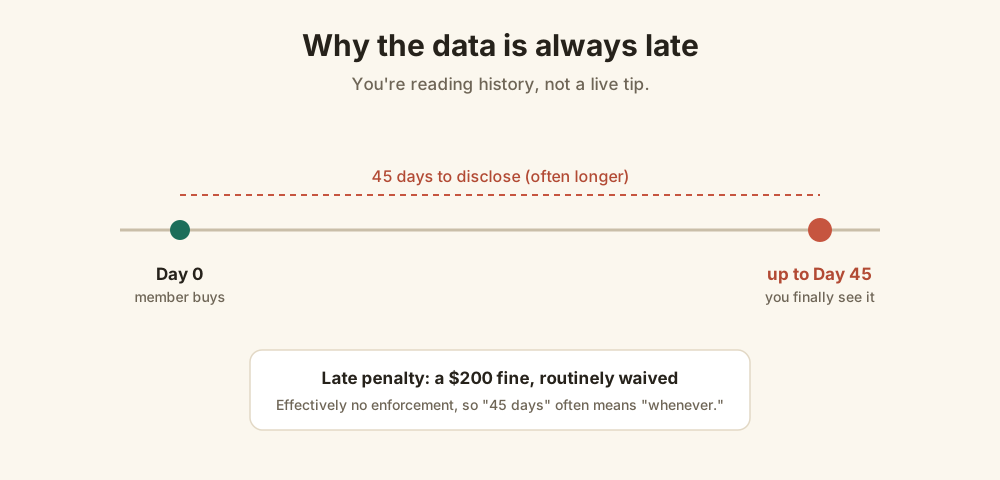
This is the single biggest trap. The data is real, but it's history.
By the time a member's NVIDIA buy shows up, the stock has already moved. You're not front-running anyone. You're reading a delayed, incomplete signal.
Enforcement barely exists. The $200 fine is a rounding error to a member of Congress, and there have been effectively no prosecutions for late filing. So "up to 45 days" often means "whenever."
Treat every congressional trade as a lagging indicator, not a live tip. That mindset alone will save you from the worst mistakes.
Does copying Congress's trades actually beat the market?
Sometimes, but the evidence is mixed and you shouldn't bet the farm on it. The Unusual Whales Democratic-tracking ETF (NANC) returned 93.2% from February 2023 through May 2026, beating the S&P 500's 78.8%, according to Morningstar. But a 2022 Dartmouth study found "no evidence of stock-picking prowess," and on a risk-adjusted basis the congress-tracking ETFs don't clearly beat the market.
So which is it? Both, honestly.
The NANC outperformance is real, but look under the hood. Its portfolio is dominated by mega-cap tech, so a lot of that "congress edge" is really just owning NVIDIA and Microsoft during a tech run.
The academic take is more sobering. Researchers keep failing to find a durable stock-picking skill once you adjust for risk and the market's overall direction.
There's history here too. A 2004 study found senators beat the market by roughly 12% a year in the 1990s, before the STOCK Act existed. The disclosure rules seem to have shrunk that edge.
The honest read: congressional trades are an interesting signal, not a cheat code. Use them to find names to research, not as a buy list.
Can you just buy an ETF that copies Congress?
Yes. If you'd rather not track trades yourself, two ETFs do it automatically. NANC, the Unusual Whales Democratic-tracking fund from the performance section above, buys what Democratic members and their spouses buy. Its Republican counterpart trades as KRUZ. Both rebalance off the same 45-day disclosures, so a single ticker gives you a delayed copy of Congress's book with no manual work.
It's the hands-off route, and it comes with real tradeoffs.
You inherit the 45-day lag by design. The fund can only buy what's already public, so it's always a step behind the actual trade.
The outperformance is also partly a tech tilt, not a congressional superpower. NANC's returns lean heavily on mega-cap names like Nvidia that most growth funds held anyway.
So the ETF is convenience, and tracking the raw trades yourself is control. One buys the whole basket for you; the other lets you pick which names to actually follow.
How to see Congress trades next to insiders and superinvestors
The most useful way to read a congressional trade is next to every other smart-money signal on that same stock. When a member of Congress buys a stock, the questions that matter are: do the big fund managers own it, are company insiders buying it too, and has an activist taken a stake? Edgrapi's per-stock page answers all four on one screen, so a congressional trade becomes context instead of an isolated data point.
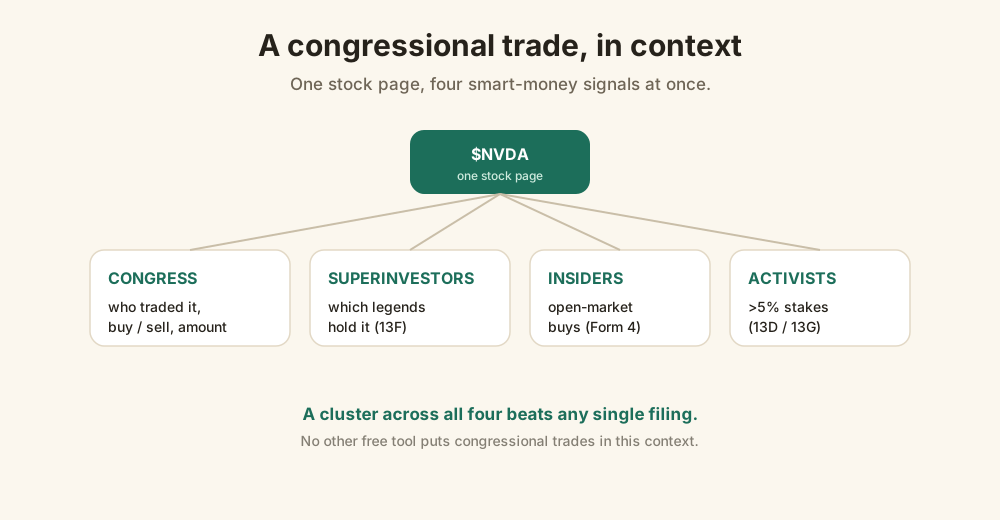
One congressman buying a stock is weak on its own. It's a lagging, small-dollar, single-person signal.
It gets interesting when it lines up with the rest. If a member of Congress bought the same stock that five superinvestors hold and a company insider just purchased, that's a cluster worth a look.
That's the whole idea behind the Edgrapi stock page. Type any ticker and you see the members of Congress who traded it, the legendary investors who hold it, recent insider buys, and any activist stakes, in one place, free.
Nvidia is a good example. Several members of Congress have disclosed NVDA trades, and it's also held by a chunk of the superinvestors the tracker follows. Seeing those on the same screen tells you more than a lone congressional filing ever could.
No other free tool puts congressional trades in that context. It's the difference between a data point and a decision.
Start with one name today
Don't try to boil the ocean. Pick one member of Congress you're curious about, or one stock you already own.
Open the free Congress tracker, see the latest disclosed trades, then check any ticker on the stock page to see who else is in it. That's the whole workflow, and it costs nothing.
See what Congress is trading →
Edgrapi surfaces public STOCK Act and SEC filings for research. It is not investment advice, and congressional disclosures are lagging, range-based, and up to 45 days old.
Frequently asked questions
How do I find out what stocks my congressman is trading?
Search their name on the House Clerk's financial disclosure site or a free tracker. Every member must file a Periodic Transaction Report within 45 days of any trade over $1,000, listing the ticker, buy or sell, date, and a dollar range. A tool like Edgrapi's Congress tracker parses those filings so you can look up any member or stock in seconds.
Is it legal to copy congressional stock trades?
Yes. Congressional trades are public disclosures required by the STOCK Act, so acting on them is ordinary public-records research, not insider trading. The legal question sits with the lawmakers, not you. Just remember the data is up to 45 days old, so you're never trading on fresh information, and copying is legal but not a guaranteed edge.
How late can members of Congress report their stock trades?
Up to 45 days after the trade, and often later. The STOCK Act sets a 45-day deadline, but the penalty for missing it is a $200 fine that ethics committees routinely waive on first request, and prosecutions are effectively nonexistent. So the trade you read today can be six weeks old or more. Always treat congressional disclosures as a lagging signal.
What is a Periodic Transaction Report?
A Periodic Transaction Report, or PTR, is the filing a member of Congress submits to disclose a batch of trades. Each line shows the asset and ticker, the owner, whether it was a purchase (P) or sale (S), the transaction date, and a dollar range like "$1,001 - $15,000." Congress reports ranges, never exact amounts, so you learn direction and rough size only.
Do congressional stock trackers cost money?
The best ones are free. Capitol Trades, Quiver Quantitative's free tier, and Edgrapi all parse the public STOCK Act filings at no cost, and the raw House and Senate sites are free too. Paid tools like Unusual Whales (about $60 a month) mainly add options flow and dark-pool data that most retail investors tracking Congress don't actually need.
Which members of Congress trade the most stock?
A small group of active traders accounts for most of the volume. In 2024, 113 members made 9,261 disclosed trades, and 202 Representatives and 56 Senators owned individual stock, with total trading value topping $635 million. Trackers like Quiver and Common Cause publish "most active" rankings, but the raw filings let you check any member's activity yourself for free.