Form D API: Private Placements and Fresh Raises as JSON
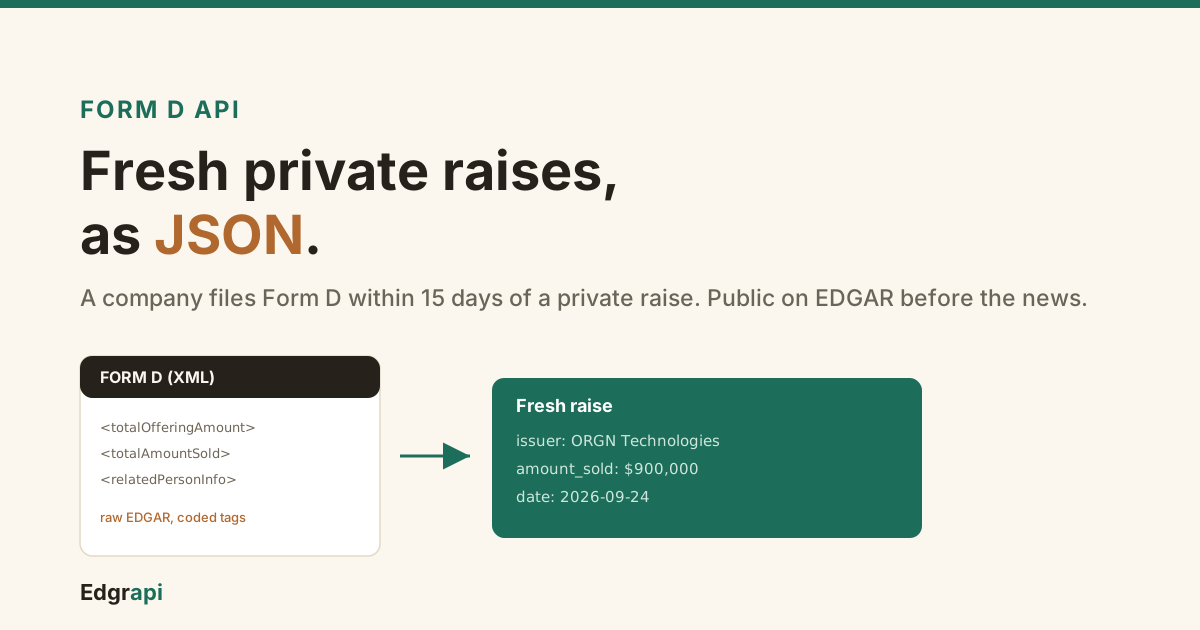
A company closes a funding round. No press release, no TechCrunch post. But 15 days later the proof is sitting in a public SEC filing that almost nobody is reading in real time.
A Form D API returns SEC Form D filings as structured JSON: the issuer, how much they are raising, how much they have sold, the exemption they claimed, and the officers behind it. Form D is the notice a US company files within 15 days of a private raise, so the API turns a raw EDGAR XML filing into a clean "who just raised money" feed you can poll. The data is free and public. Getting it as usable JSON is the work.
/v1/formd/latest returns a market-wide feed you can poll for newly funded companies, on one key. Read amount_sold, not offering_amount, and treat it as a lead, not a cap table.What does a Form D API return?
A Form D API returns each Regulation D filing as a JSON object with the money and the people parsed out: issuer name and CIK, the total offering amount, the amount sold so far, the amount remaining, the exemption claimed, the minimum investment, the number of investors, and the related persons (officers and directors). You also get the filing date and a link to the document on EDGAR. One call, no XML parsing.
The useful part is that it is structured. The raw Form D on EDGAR is an XML document with nested tags and codes you have to decode.
An API hands you fields you can filter and sort on directly. You can ask for raises above a threshold, in an industry, in a date window, without opening a single filing.
That is the whole pitch. The SEC already publishes this. An API saves you from building and maintaining the parser.
What is SEC Form D, and who has to file it?
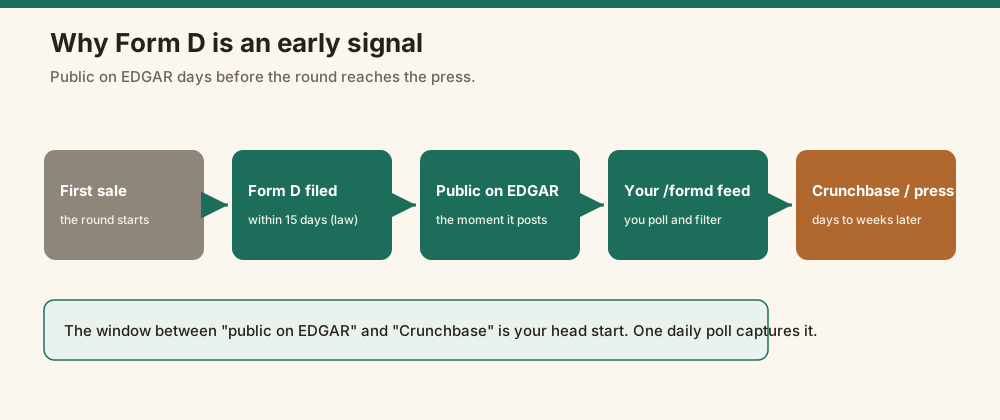
SEC Form D is the short notice a company files when it raises money privately under Regulation D, the exemption that lets issuers skip a full public registration. The filing is due within 15 days of the first sale of securities. It names the issuer, its officers and directors, the total offering size, how much has sold, and which exemption the company is using. Funds, startups, and private companies of every size file one.
Most Form D offerings use Rule 506. There are two versions, and the difference matters.
Rule 506(b) lets a company raise an unlimited amount from accredited investors plus up to 35 non-accredited ones, with no general advertising allowed. Rule 506(c) lets the company advertise the raise publicly, but it has to take reasonable steps to verify every investor is accredited. The SEC's Regulation D rules spell out both.
An accredited investor, per the SEC definition, generally earns over $200,000 a year or has a net worth above $1 million excluding their home.
This market is bigger than most people assume. According to SEC Division of Economic and Risk Analysis data, Regulation D offerings raised roughly $2.4 trillion in 2025 across more than 34,000 new filings. That is far larger than the public IPO market in a typical year.
Funds raise most of that money. Pooled investment vehicles file the bulk of Form Ds, so a lot of the feed is private funds rather than operating companies hunting for growth capital. The entity_type field is how you tell them apart.
How do you get Form D filings as JSON without scraping EDGAR?
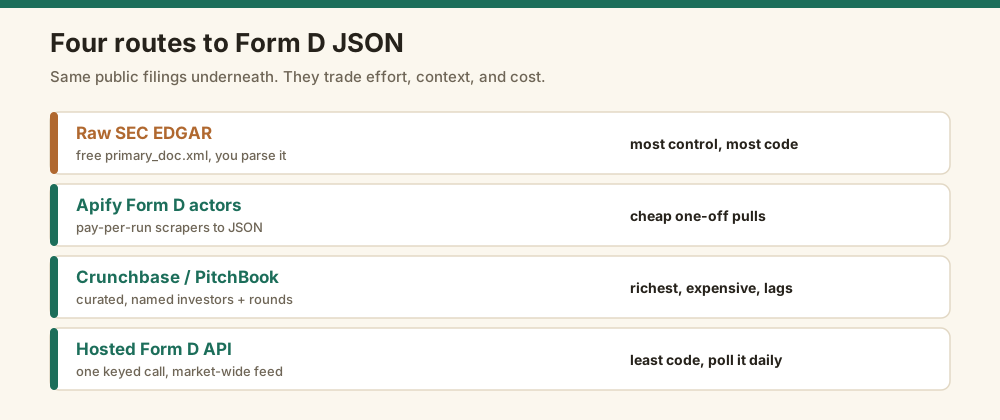
You have four routes, and they trade effort against cost. You can parse the raw EDGAR Form D feed yourself, run a pay-per-run scraper, buy a curated funding database, or call a hosted API that returns the filings as typed JSON. The filings are free and public every way, so what you pay for is the parsing, the normalizing, and not having to maintain any of it.
The raw route starts at EDGAR. The SEC publishes every Form D as primary_doc.xml, free, no key. The catch is the XML: nested tags, coded exemptions, and officer records you have to flatten yourself.
The scraper route is the Apify actors. Several turn Form D into JSON funding leads, priced per run. They are a fine fit for a one-off pull of a few thousand filings, less so for a feed you poll every day.
The database route is Crunchbase or PitchBook. These are richer, with named investors and round labels, but they are expensive subscriptions and often lag the filing itself. Form D hits EDGAR before the round shows up there.
The hosted-API route returns the filings as clean JSON from one endpoint. You trade some control for far less code.
How do you find companies that just raised money?
You poll a market-wide "latest Form D" feed and filter it. Instead of looking up one company, you pull every Form D filed recently across the whole market and sort for the raises you care about by size, industry, or date. A company that just filed a Form D has fresh money, which usually means it is hiring and about to spend. That is as clean a buying signal as public data gets.
This is the sales and sourcing use case, and it is the reason Form D data sells.
A BD team pulls newly funded companies in its target industry, with the officers' names already parsed, before those companies show up in Crunchbase. A VC associate watches for new funds and competitive raises in a sector. A recruiter targets companies that just closed a round and are about to hire.
Here is what one of these looks like in the feed. A recent filing showed ORGN Technologies, a British Columbia corporation, reporting a $900,000 offering with the full amount already sold and two investors, dated September 24, 2026. Small, specific, and real, the kind of raise you could act on the day it posted.
Edgrapi's /v1/formd/latest returns the market-wide feed in one call.
curl -s -H "X-API-Key: $KEY" \
  "https://api.edgrapi.com/v1/formd/latest?limit=50"
# each filing: { issuer, issuer_cik, industry, offering_amount,
#   amount_sold, total_investors, date_of_first_sale, exemptions, url }
Run that on a schedule, filter for the raises above your threshold, and push the hits to your CRM. You are reading the primary source the day it posts, not waiting for a database to catch up.
What do the Form D fields actually mean?
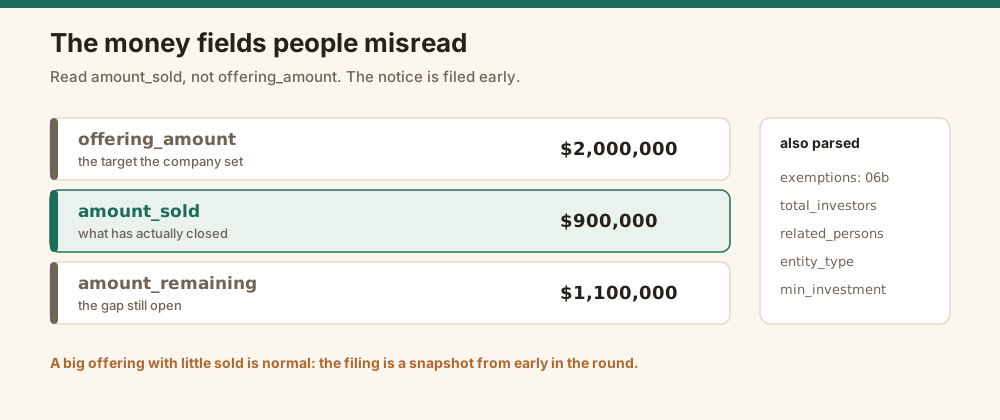
The money fields are the ones people misread. offering_amount is the total the company says it is trying to raise, which can be a round number or listed as indefinite. amount_sold is how much has actually closed so far. amount_remaining is the gap between them. A filing can show a large offering with only a little sold, because the notice is filed early, within 15 days of the first dollar.
So read amount_sold, not offering_amount, if you want the money that has actually landed.
The exemptions field carries codes, like 06b for Rule 506(b). has_non_accredited_investors tells you whether any non-accredited money is in the deal, which is only allowed under 506(b).
total_investors is a count, not names. related_persons gives you the officers and directors with their roles, which is where the contactable humans are.
One more field worth watching is entity_type. A pooled investment fund filing a Form D is a very different signal than an operating company raising growth capital, and the type tells you which you are looking at.
Two more fields earn their keep for filtering. jurisdiction_of_inc and year_of_inc let you screen by where and when the issuer was formed, so a 2026 Delaware startup reads differently from a decades-old fund. And minimum_investment hints at who the raise is aimed at, from a small retail-friendly check to a six-figure institutional one.
Is Form D a reliable funding signal?
Form D is a reliable signal that a raise started, not proof of how much closed or who invested. The filing is a regulatory notice filed early, so it lists intent. A company can report a large offering_amount and sell almost none of it. It names officers, never investors. And most filers are investment funds, not the startups people picture. Treat it as a strong lead, checked against the amounts.
Here is where people get burned. They read offering_amount as "the company raised this," when it is only the target.
The amendment gap is the other catch. A company is supposed to file an amended Form D as more of the round sells, but plenty do not do it promptly. So the amount_sold you see can trail the money actually in the bank by weeks.
The honest read is narrower and still valuable. A fresh Form D means a real, legally binding raise has begun, filed by a named company with named officers, days before any news outlet covers it.
It will not tell you the investor names. For that you still need Crunchbase, a press release, or the company itself.
And the amounts update slowly. Companies file amendments as more sells, but the first filing is a snapshot from early in the round. If you need final numbers, you wait or you ask.
None of this makes the signal weak. It makes it a starting point, which is exactly what a sourcing pipeline needs.
What is the best Form D API for developers?
There is no single best Form D API, because the options optimize for different jobs: raw access, one-off scraping, curated investor context, or a keyed feed you poll. Pick by what you are building. Every option below reads the same public SEC filings underneath, so the real differences are packaging, freshness, and price.
| Option | Parsed JSON fields | Market-wide "just raised" feed | Auth and price | Best for |
|---|---|---|---|---|
| Raw SEC EDGAR | No, you parse XML | Yes, you build it | Free, no key | Full control, the source |
| Apify Form D actors | Yes | Per run | Pay per run | One-off scrapes |
| Crunchbase / PitchBook | Yes, plus investors | Yes, richer | Expensive subscription | Named investors and rounds |
| sec-api.io | Yes | Query | Subscription | Deep SEC filing coverage |
| Edgrapi /v1/formd | Yes, plus a notable count | Yes, one call | One key, SEC + government | Keyed feed and breadth |
Be honest about the trade-offs. If you need named investors and clean round labels, Form D alone will not give you that, and Crunchbase is the right tool. Form D is a regulatory notice, not a cap table.
Edgrapi's lane is different. It is the primary source as a keyed GET, with a market-wide latest feed, on the same key that also reads SEC filings, insider trades, 13F holdings, and US government contract and spending data. If you want fresh raises piped into the same pipeline as the rest of your signals, that breadth on one key is the point.
The practical test is simple. If your product already pulls other SEC or government data, adding Form D on the same key is a new endpoint, not a new vendor to buy and wire in. If Form D is the only thing you need and you also want investor names, a curated database earns its price.
How do you call edgrapi's Form D API?
You call one of two GET endpoints with an API key. GET /v1/formd/latest returns the market-wide feed of recent filings, and GET /v1/formd/{issuer} returns a specific company's Form D history by name or CIK. Add limit to size the page. A failed or unknown lookup costs nothing.
curl -s -H "X-API-Key: $KEY" \
  "https://api.edgrapi.com/v1/formd/0002141722?limit=5"
# -> { issuer, cik, count, filings: [ {offering_amount, amount_sold,
#      exemptions, date_of_first_sale, related_persons, url} ], source }
Each filing carries the money fields, the exemption, the investor count, the related persons, and a direct link to the document on EDGAR, so you can decide in code and open only the filings worth a human look.
Note that public companies almost never file a Form D, because they raise in the public markets. A lookup on a large public ticker returns an empty result with a hint. Form D is a private-raise filing, so the data lives in private and newly private companies.
Because the same data is exposed as an MCP tool, an AI agent can pull it directly. Ask an agent "which companies in fintech filed a Form D this week," and it hits the feed and answers from the live filings. The full endpoint docs cover the parameters, and the companion insider and 8-K event feeds sit on the same key.
Wire fresh raises into your pipeline
If you sell to, invest in, or recruit from companies that just raised money, a Form D API is the cheapest early-warning system you can build. Point /v1/formd/latest at a daily job, filter for the industries you care about, and push the hits to your CRM before the round hits the news. Read amount_sold not offering_amount, treat it as a lead not a cap table, and start free on the docs.
Frequently asked questions
What is a Form D API?
A Form D API returns SEC Form D filings as structured JSON instead of raw EDGAR XML. Each filing comes back with the issuer, the offering amount, the amount sold, the exemption claimed, the officers, and a link to the document. It saves you from building an XML parser, and it lets you filter private-placement data by amount, industry, and date in one call.
How do I get SEC Form D filings as JSON?
Four ways. Parse the EDGAR Form D XML feed yourself for free, run an Apify scraper per run, buy a curated database like Crunchbase, or call a hosted API like edgrapi's /v1/formd that returns the filings as typed JSON. The filings are public, so what you pay for is the parsing, the normalized fields, and a market-wide feed you can poll without maintaining any of it.
How do I find companies that just raised money?
Poll a market-wide Form D feed and filter it. A company files a Form D within 15 days of its first sale, so a recent filing means fresh capital. Pull the latest filings, filter by offering size, industry, and date, and you get newly funded companies with their officers already parsed, often days before the round appears in Crunchbase or the press.
Is Form D public, and how soon is it filed after a raise?
Form D is public the moment it posts to SEC EDGAR, and it is due within 15 calendar days of the first sale of securities in the offering. That makes it one of the earliest public confirmations that a private round has started, usually ahead of any news coverage. The filing is a notice of the raise, not a full disclosure of terms or investors.
How much can a company raise with Form D?
There is no cap under Rule 506, the most common Form D exemption. A company can raise an unlimited amount from accredited investors, and under Rule 506(b) up to 35 non-accredited investors as well. Regulation D offerings raised about $2.4 trillion in 2025 across more than 34,000 filings, according to SEC data, far more than the public IPO market.
Does Form D tell you who invested?
No. Form D names the issuer and its related persons, meaning officers and directors, but it never lists the investors. It reports the total offering amount, the amount sold, and the investor count, not the names or the cap table. For named investors and round labels you need a curated source like Crunchbase. Form D is a regulatory notice, best used as an early lead.