SEC EDGAR API for Insider Cluster Buys: The Multi-Insider Signal
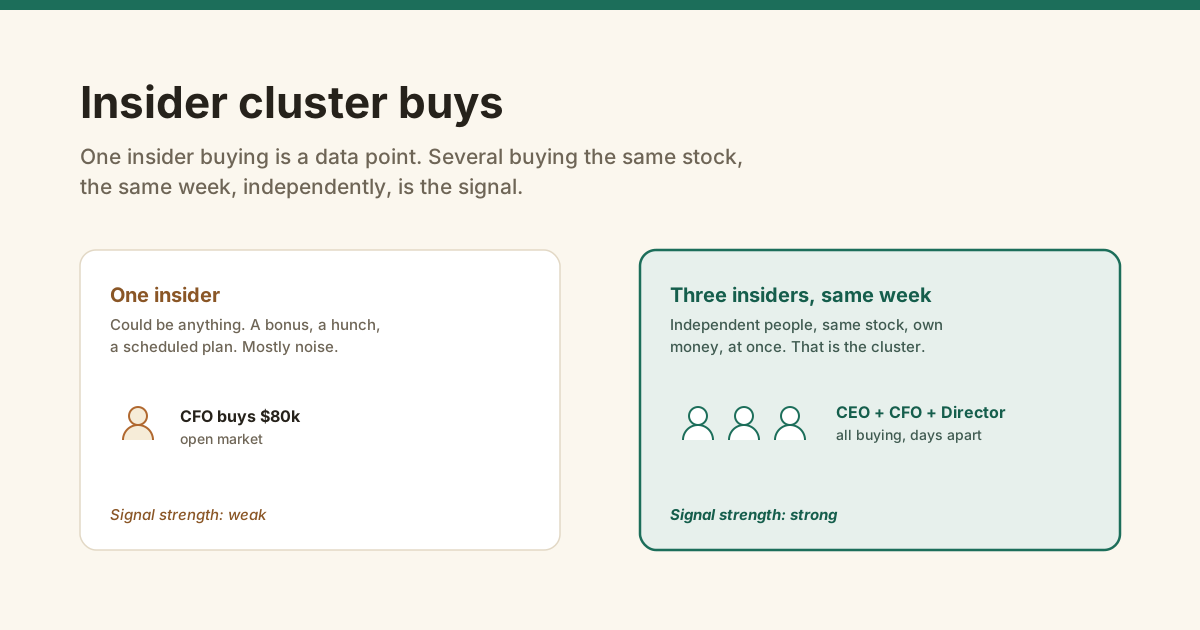
A single insider buying their own company's stock tells you almost nothing. People buy for a hundred reasons.
But when three or four of them buy the same stock in the same two weeks, with their own money, something changed. That is a cluster buy, and it is one of the few insider signals with real history behind it.
Here is what a cluster buy is, how to pull it from the SEC EDGAR API instead of building the detector yourself, and where it quietly misleads you.
An insider cluster buy is when several distinct company insiders make open-market purchases of the same stock inside a short window, usually two to three weeks. It matters because one insider buying is noise, while several buying at once and independently is a consensus of the people closest to the numbers. Academic work has tied cluster buying to stronger abnormal returns than a lone insider purchase.
What is an insider cluster buy?
An insider cluster buy is a group of open-market purchases by three or more different insiders of the same company, filed within days of each other. Each purchase is a Form 4 with transaction code P, meaning the insider spent their own cash on the open market. The cluster is the pattern across them: officers and directors, acting separately, all buying the same stock at the same time.
The key word is distinct. Ten filings from one CEO is not a cluster. Three filings from a CEO, a CFO, and a board member is.
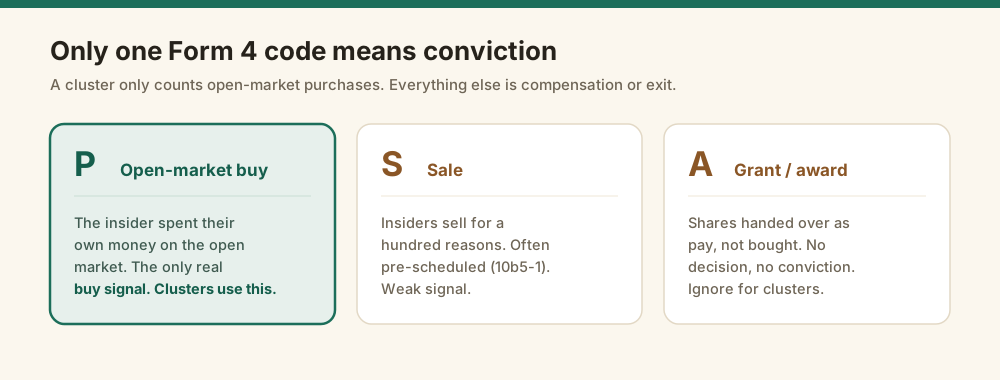
It also has to be code P. An insider getting shares as a bonus, or selling on a schedule, tells you nothing about conviction. Only an open-market purchase does, because it is the one trade where the insider chose to put money in.
Why does one insider buying barely matter?
One insider purchase is a weak signal because a single person buys for reasons you cannot see: optics, a bonus reinvested, a genuinely wrong hunch. The evidence for insider buying only gets strong when several insiders agree. Research going back to Lakonishok and Lee's 2001 study found insider purchases earn abnormal returns, and later work found consensus buying, many insiders at once, carries a notably stronger edge than a lone buyer.
Think about what a cluster actually requires. Several people who know the business better than any analyst, deciding separately that the stock is cheap enough to buy with their own money, in the same short window.
That is hard to fake and hard to coordinate innocently. It is the closest thing insider data gives you to a vote.
Published studies have put the edge at several percentage points of abnormal return over the following 6 to 12 months, strongest in smaller companies. Historical, not a promise, and not investment advice. But it is why cluster buying is worth isolating from the raw Form 4 stream.
How do you find insider cluster buys with the SEC EDGAR API?
Finding cluster buys means reading every Form 4 across the whole market, keeping only the open-market purchases, grouping them by company, and flagging any stock with three or more distinct insider buyers in the window. Doing that yourself is a real-time pipeline over the SEC firehose. Edgrapi runs that scan continuously and hands back the clusters as JSON from one endpoint.
The market-wide cluster feed is a single call:
curl -H "X-API-Key: edgr_your_key" \
  "https://api.edgrapi.com/v1/insider/clusters?days=15&min_insiders=3"
{
"scope": "cluster buys: 3+ insiders buying the same stock within 15 days",
"window_days": 15,
"min_insiders": 3,
"count": 6,
"clusters": [
{
"ticker": "XYZ",
"company": "Example Corp",
"insider_count": 3,
"total_value": 1240000,
"buyers": [
{ "owner": "Jane Roe", "officer_title": "CEO", "buy_value": 620000 },
{ "owner": "John Doe", "officer_title": "CFO", "buy_value": 410000 }
]
}
],
"source": "SEC EDGAR Form 4 (open-market purchases, code P)"
}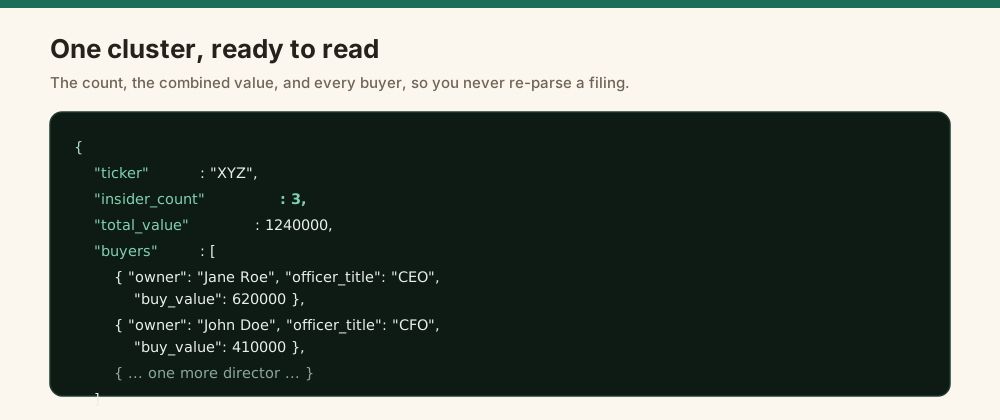
Tune it with query parameters: days for the window, min_insiders for how many distinct buyers to require, and min_value to drop token purchases. The same data is public to browse on the free cluster buys page, no key needed.
The filters that turn noise into signal
Turning raw filings into a clean cluster takes four filters, in order: keep only code P open-market purchases, deduplicate by distinct insider so one busy filer cannot fake a crowd, group by company, then require your minimum insider count inside the window. Skip any one of them and you get a list of coincidences, not a signal.
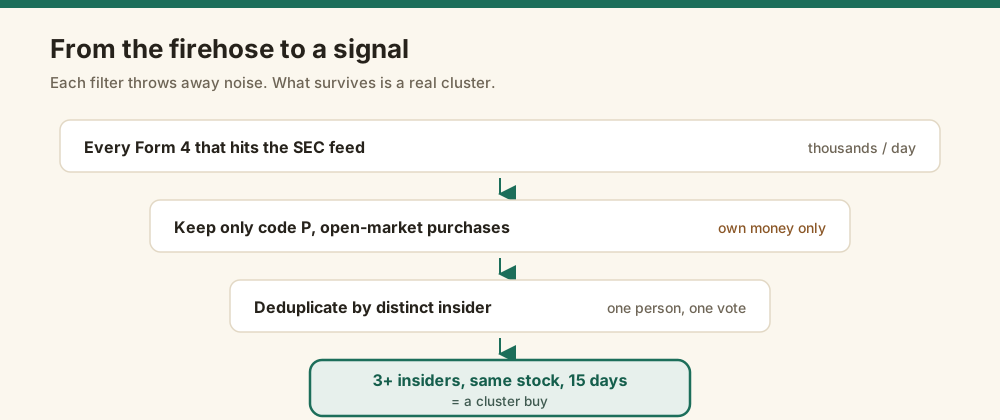
The dedup step is the one people get wrong. A single insider often files several Form 4s in a week as they build a position. Count filings instead of people and one determined buyer looks like a crowd of three.
The window matters too. Too wide and you sweep up unrelated purchases months apart; too narrow and you miss a cluster that formed over a fortnight. Two to three weeks is the range most of the research uses.
What a cluster buy is not
A cluster buy is a strong signal of insider conviction, not a guarantee of anything. Insiders know their business better than anyone; they do not know the market, and they are frequently early or plain wrong on timing. The signal is also thinner in small, illiquid names where a few buys move the numbers. Read it as one input, weighted by who bought and how much, never as a trigger on its own.
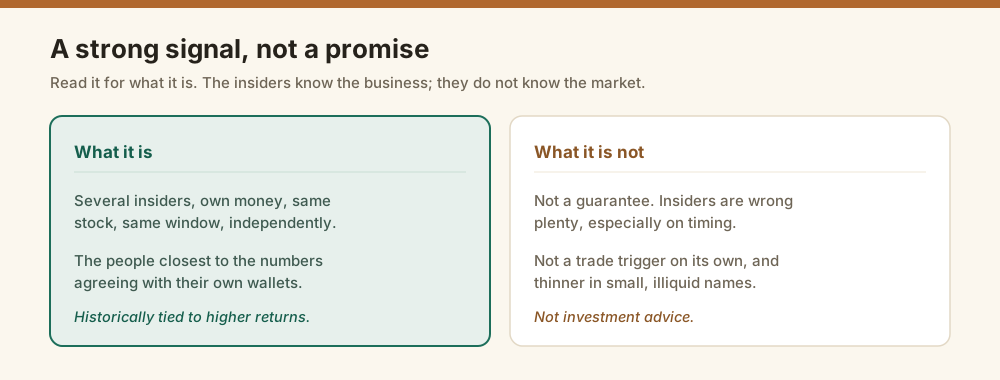
The honest read: a CEO and CFO each putting six figures into their own stock is worth noticing. It still says nothing about next quarter. Weight the who and the how-much, and pair it with the rest of the picture.
That is why the endpoint returns each buyer's title and dollar amount, not just a count. Three junior officers buying $5,000 each is a different signal than a CEO and CFO buying $500,000 each.
Watch clusters form in real time
The useful way to run cluster data is as a live feed, checked as new Form 4s land, so you see a cluster the day the third insider files rather than weeks later in a report. Edgrapi scans the market-wide feed continuously and accumulates clusters, so you can poll the endpoint on a schedule and diff against what you have already seen.
Grab a free key with 100 credits a month. Poll /v1/insider/clusters, compare tickers against your last pull, and alert on anything new.
If you want the individual trades behind a cluster, the Form 4 endpoint returns the parsed transactions per company. And if you track institutions as well as individuals, pair this with 13D/13G activist stakes and 13F fund holdings for the full ownership picture. See the live board on the free cluster buys radar.
Frequently asked questions
What is an insider cluster buy?
An insider cluster buy is when three or more distinct insiders of the same company make open-market purchases (Form 4, code P) within a short window, usually two to three weeks. One insider buying is a weak signal; several buying at once and independently is a consensus of the people closest to the business, which research has tied to stronger returns.
Are insider cluster buys a reliable signal?
They are one of the stronger insider signals, but not a guarantee. Studies going back to Lakonishok and Lee (2001) found insider purchases earn abnormal returns, with consensus or cluster buying carrying a bigger edge than a lone buyer, often several percentage points over the next 6 to 12 months. It is historical, strongest in small caps, and not investment advice.
How do I find insider cluster buys with the SEC EDGAR API?
Read every Form 4, keep only code P open-market purchases, deduplicate by distinct insider, group by company, and flag any stock with your minimum insider count in the window. Edgrapi runs that scan continuously; call /v1/insider/clusters?days=15&min_insiders=3 and it returns each cluster with the buyers, their titles, and the combined value as JSON.
Why does only Form 4 code P count for a cluster?
Code P is an open-market purchase, the one transaction where an insider spent their own money by choice. Code S is a sale, often pre-scheduled under a 10b5-1 plan, and code A is a grant or award the insider received as pay. Neither reflects a decision to buy, so a cluster detector that counts them is measuring compensation, not conviction.
How many insiders make a cluster buy?
Three or more distinct insiders is the common threshold, and it is the default on Edgrapi's endpoint. The key word is distinct: several Form 4 filings from one person building a position is not a cluster. You deduplicate by insider first, then require the count, so one busy filer can never look like a crowd. You can raise the threshold with the min_insiders parameter.
What is the difference between a cluster buy and a single insider buy?
A single insider buy is one person's decision, which can mean anything. A cluster buy is several insiders independently reaching the same conclusion in the same window, which is much harder to explain away. The academic edge shows up in the cluster, not the lone purchase, which is why isolating clusters from the raw Form 4 stream is worth doing.