Superinvestor Portfolio Tracker: Follow Buffett & Burry
You don't need a Bloomberg terminal to see what Warren Buffett is buying. The SEC makes him tell you every quarter, for free. The only hard part is reading it.
A superinvestor portfolio tracker turns the quarterly SEC filings of famous investors into a readable feed of what they own and what changed. Every large fund files a Form 13F within 45 days of each quarter, listing its US stock positions, so a tracker collects those, resolves the tickers, and diffs them so you can see who Buffett, Burry, or Ackman is buying and selling. The catch is that 13F is a slow, quarterly snapshot.
What is a superinvestor portfolio tracker?
A superinvestor portfolio tracker is a tool that follows legendary investors through their public SEC filings. Because any manager with over $100 million must file a 13F each quarter, the holdings of investors like Warren Buffett and Michael Burry are public record. A tracker pulls those filings, turns the raw CUSIPs into tickers, and shows each investor's portfolio and its quarter-over-quarter changes, so you can watch the smart money without a data subscription.
The appeal is simple. These are some of the best track records in the world, laid out for free.
The work a tracker saves is real. A raw 13F is an SEC information table full of CUSIP codes, split across sub-managers, meant for regulators.
A good tracker does the parsing and the diffing, so instead of a legal document you get "Buffett added Apple, trimmed Bank of America, and started a new position in this name." That's the difference between public data and usable insight.
Why do people follow superinvestors?
People follow superinvestors to learn from the best track records in investing, for free. When someone like Buffett or Klarman takes a new position, it's a signal that a great investor did the work and found something worth owning. Following them is a source of research ideas, a window into how the pros think, and a way to hold the smart money accountable to what they actually did.
There are a few honest reasons.
The first is idea generation. A superinvestor's new buy is a vetted starting point, a name already filtered by someone with decades of edge.
The second is learning. Watching what a value investor buys versus what a macro fund does teaches you more about styles than a textbook does.
The third is accountability. The filings are on the record, so you can see whether a famous manager actually did what they said, quarter after quarter.
None of that is about copying the trade. It's about using public disclosure to think better.
Which superinvestors can I track?
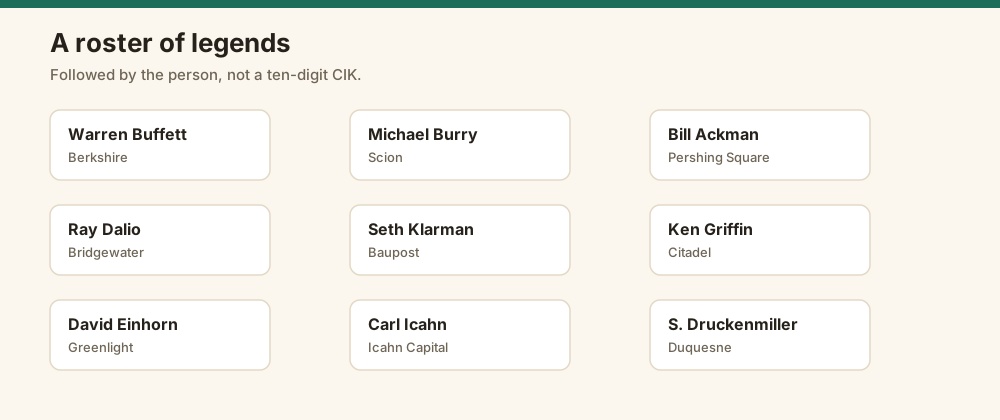
You can track most of the household-name investors, because they all file 13Fs. Edgrapi's tracker curates a roster of legends by the person, not just the fund, so you follow "Buffett" rather than a ten-digit CIK. It covers value icons, big activists, and famous quant and macro shops, and you can look up any other fund by name or CIK.
Here's the core roster.
| Investor | Fund | Known for |
|---|---|---|
| Warren Buffett | Berkshire Hathaway | Long-term value |
| Michael Burry | Scion Asset Management | Contrarian bets |
| Bill Ackman | Pershing Square | Concentrated activism |
| Ray Dalio | Bridgewater Associates | Macro |
| Jim Simons' fund | Renaissance Technologies | Quant |
| Ken Griffin | Citadel Advisors | Multi-strategy |
| Chase Coleman | Tiger Global | Growth and tech |
| Stanley Druckenmiller | Duquesne Family Office | Macro |
| Seth Klarman | Baupost Group | Deep value |
| David Einhorn | Greenlight Capital | Value and shorts |
| Dan Loeb | Third Point | Event-driven activism |
| Carl Icahn | Icahn Capital | Activism |
The list runs past a dozen, including Gates Foundation Trust, Soros Fund Management, and Coatue. What they share is a public Form 13F, which is the only reason any of this is trackable. Add a fund that isn't on the named list by its CIK and it works the same way, so the roster is a shortcut, not a limit.
The famous-name shortcut matters more than it sounds. Nobody remembers CIK numbers, so a tracker that lets you type "burry" or "ackman" meets people where they actually are.
How do I see what Warren Buffett owns?
You look up the investor by name and read the parsed portfolio. On Edgrapi's superinvestors tracker, you open Berkshire Hathaway and see Buffett's positions ranked by size, each with its ticker, dollar value, and percent of the book, plus what changed since last quarter. Developers can get the same data from the API with a single call.
For a quick look, the web tracker is enough.
You pick an investor, and the current portfolio loads: the big positions at the top, the new buys and exits flagged, the whole thing readable instead of raw.
For building something, there's the API.
curl "https://api.edgrapi.com/v1/holdings/buffett?changes=true" \
  -H "Authorization: Bearer YOUR_EDGRAPI_KEY"
That returns Berkshire's latest 13F as JSON, with each position tagged new, added, reduced, or exited. The full endpoint is covered in the 13F holdings API guide, so a tool can pull any investor on the roster the same way.
Where does superinvestor data come from?
It all comes from the SEC, for free. Every superinvestor tracker, from Dataroma to Edgrapi, is built on the same public Form 13F filings that large managers submit to SEC EDGAR each quarter. The tracker's job is parsing, not access: it downloads the filing, resolves the CUSIPs to tickers, and diffs it against last quarter. The document behind Buffett's portfolio is public, and anyone can read it.
You can go to the source yourself.
Berkshire's 13F filings sit on SEC EDGAR under its CIK, free to download, and every other manager's are there too.
What you get raw is the catch. It's an XML information table of CUSIPs and share counts, split across sub-managers, with no tickers and no changes computed.
That gap is why trackers exist. Dataroma, WhaleWisdom, and Edgrapi all read the same filings, and they compete on how cleanly they parse and present them, not on secret data.
How fresh is superinvestor data?
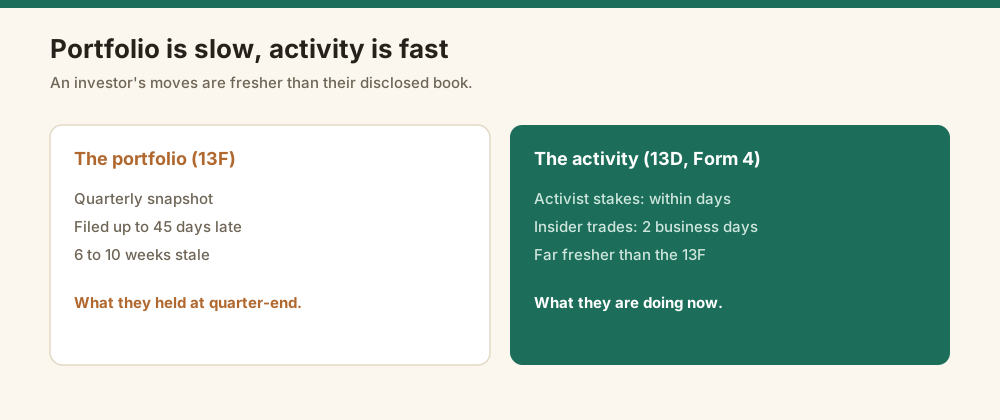
Not very, and this is the thing most trackers gloss over. A 13F is filed up to 45 days after a quarter ends, so by the time you read Buffett's portfolio, it's roughly 6 to 10 weeks old, and he may have already changed it. The portfolio you see is a quarter-end snapshot, not what the investor holds today. Treat it as history, not a live feed.
But not everything a superinvestor does is that slow.
The 13F portfolio is the slow part, updated four times a year on a six-week delay. It's the least timely of an investor's public disclosures.
Their activity is faster. When a big investor crosses 5 percent of a company, they file a 13D or 13G within days, and insider trades show up on Form 4 within two business days. So a fund's recent moves can be far fresher than its disclosed portfolio.
That's the honest edge of a good tracker. Edgrapi's superinvestor feed pairs the quarterly 13F with those faster activist and insider filings, so you see not just the stale portfolio but the recent activity around it.
A concrete example makes the gap obvious. Say a fund buys a stock in early April. Its 13F won't show that position until mid-August, four months later. But if the purchase crossed the 5 percent activist threshold, a 13D would have hit within days, back in April. Same fund, same position, one disclosure four months ahead of the other.
How do I follow an investor's moves over time?
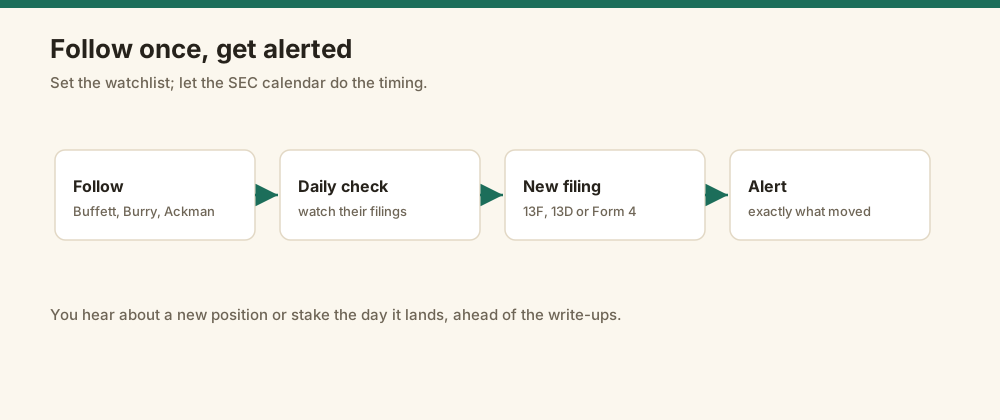
You follow an investor once, and the tracker watches their filings for you. Instead of manually checking each quarter, you add an investor to a watchlist and get alerted when a new filing lands, so you hear about a new position or a sold-out stake without refreshing anything. Because the data updates on the SEC's schedule, following is a set-and-forget action, not a daily chore.
The mechanics are light.
You follow the investors you care about, say Buffett, Burry, and Ackman. The tracker checks their filings on a schedule.
When something changes, a new 13F position, a fresh activist stake, an insider buy, you get a note pointing at exactly what moved. No staring at a dashboard waiting for a quarterly filing.
This is how a tracker turns from a lookup tool into an actual monitor. You set your watchlist once and let the SEC calendar do the timing.
There's a real payoff to that timing. A superinvestor move is most valuable the moment it's disclosed, before it becomes a headline. An alert that fires the day a new 13D or 13F lands puts you ahead of the write-ups, which is the whole point of following rather than checking in whenever you happen to remember.
How do I get superinvestor data as JSON?
You call the holdings endpoint with the investor's name and get their portfolio as clean JSON. Edgrapi's /v1/holdings/{name} accepts a famous name like berkshire, burry, or ackman, a CIK, or a filer ticker, and returns the 13F positions with tickers resolved and quarter-over-quarter changes computed. There's a matching MCP tool, get_holdings, so an AI agent can pull an investor's portfolio directly.
This is the builder's path.
If you're making a newsletter, a dashboard, or a bot, you don't want to scrape a web page. You want structured data.
The API gives you each position with issuer, ticker, value, shares, percent of the book, and a change tag, on one key. The 13F holdings API guide covers the fields, the changes, and the tracker pattern in full, so a superinvestor tool is a small layer on top of it.
That layer is thinner than it looks. A newsletter is the roster plus a weekly pull. A dashboard is the roster plus a table. An alert bot is the roster plus a diff and a webhook. All of them are the same holdings endpoint called once per investor, which is why most superinvestor tools are a weekend of work, not a data pipeline.
Same public data, whether you read it on the web tracker or pull it as JSON.
Should you copy superinvestors' trades?
No, at least not blindly, and understanding why is the point of tracking them well. A 13F shows what a fund held at quarter-end, weeks ago, and only its long US stocks. You don't see the entry price, the thesis, the hedges, the shorts, or the bonds, so copying a stale, partial snapshot is how people get hurt following the smart money.
Use the data for research, not imitation.
A superinvestor's new position is a lead, not a trade. It tells you a great investor found something worth a deep look, which is a starting point for your own work.
Position size is a clue worth reading too. A tiny new stake is often just a fund starting to test an idea, while a position that jumps to a big share of the book is real conviction. The percent-of-book number is how you tell a toe in the water from a genuine bet, and it's why a good tracker surfaces it next to every holding.
And remember what's missing. A fund can be net bearish while its 13F looks bullish, because shorts never appear. A famous manager can hold a put, which is a bearish bet, not a vote of confidence.
Track superinvestors to learn what the best are thinking about. Do your own homework before you act on any of it.
Watch what the legends are doing, not just what they held
The best reason to track superinvestors is not to copy them. It's to see, in public and for free, what the sharpest investors are researching and where they're putting real money.
Start with a name you care about, Buffett, Burry, Ackman, and read the portfolio plus the recent activity, not just the quarterly snapshot. Follow a few, let the filings come to you, and use the moves as leads for your own research. The data is public, the tracker does the parsing, and the only thing it asks of you is to remember that a 13F is history, not a live trade to chase.
Frequently asked questions
What is a superinvestor portfolio tracker?
A superinvestor portfolio tracker is a tool that follows famous investors through their public SEC filings. Because any manager with over $100 million must file a 13F each quarter, the holdings of investors like Warren Buffett and Michael Burry are public. A tracker pulls those filings, resolves the CUSIPs to tickers, and shows each investor's portfolio and its quarter-over-quarter changes, so you can watch the smart money without a data subscription.
How do I see what Warren Buffett owns right now?
You look up Berkshire Hathaway on a superinvestor tracker and read its latest 13F. On Edgrapi you open Buffett's portfolio and see his positions ranked by value, with tickers, dollar amounts, and what changed since last quarter, or pull it from the API with GET /v1/holdings/buffett. Remember the filing is a quarter-end snapshot up to 45 days old, so it shows what he held, not necessarily what he holds today.
Which famous investors can I track?
Most household names, because they all file 13Fs. Edgrapi curates a roster including Warren Buffett (Berkshire), Michael Burry (Scion), Bill Ackman (Pershing Square), Ray Dalio (Bridgewater), Ken Griffin (Citadel), Seth Klarman (Baupost), David Einhorn (Greenlight), Carl Icahn, Stanley Druckenmiller, and more, and you can look up any other fund by name or CIK. Anyone managing over $100 million in US equities is trackable.
How current is superinvestor 13F data?
It is a lagged quarterly snapshot. Managers have up to 45 days after a quarter ends to file a 13F, so a portfolio you read is roughly 6 to 10 weeks old and may already have changed. Faster filings help: 13D activist stakes and Form 4 insider trades land within days, so an investor's recent activity is fresher than their disclosed portfolio. Treat the 13F itself as history.
Can I get superinvestor holdings as JSON?
Yes. Edgrapi's /v1/holdings/{name} takes a famous name like berkshire, burry, or ackman, a CIK, or a filer ticker, and returns the 13F portfolio as clean JSON with tickers resolved and quarter-over-quarter changes computed. There's a matching MCP tool, get_holdings, for AI agents. It's the same public data as the web tracker, structured for building a newsletter, dashboard, or bot.
Should I copy superinvestors' trades?
No, not blindly. A 13F shows only long US stock positions, held at quarter-end and up to 45 days stale, with no entry price, thesis, hedges, shorts, or bonds. A fund can be net bearish while its 13F looks bullish, and a listed put is a bearish bet, not ownership. Use superinvestor data as research leads to investigate, not trades to mirror.