What Is an S-1 Filing? IPO Registration Explained (2026)
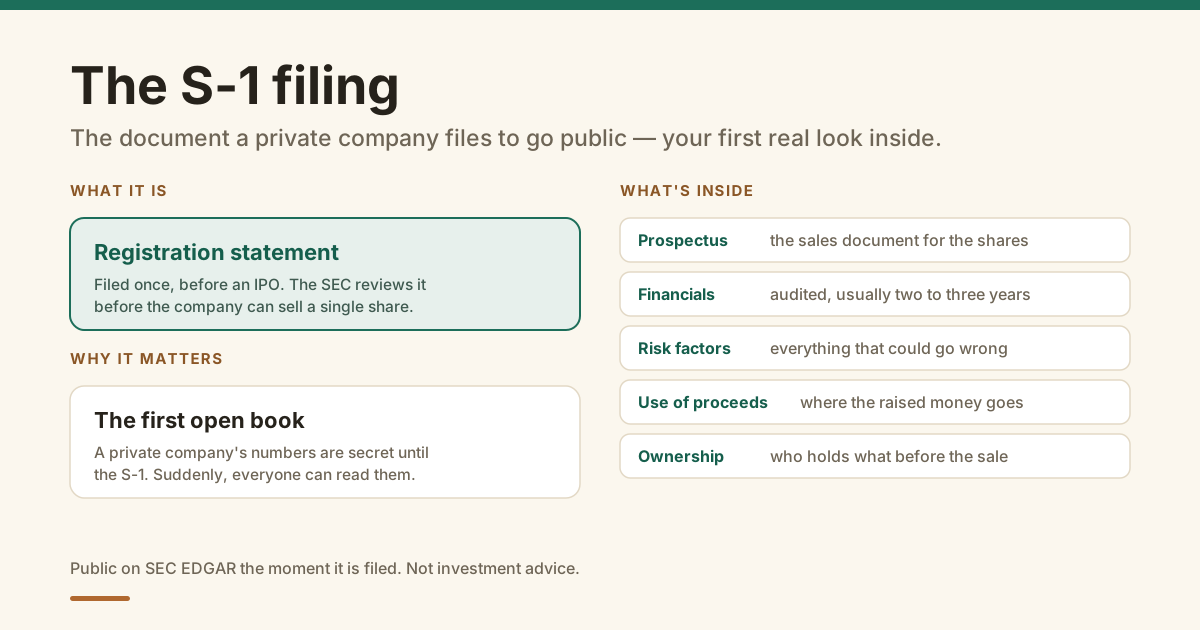
An S-1 is the big registration statement a private company files with the SEC before it goes public. It is the document a company has to publish to sell shares to the public for the first time, and it holds the prospectus: the first audited financials, the risk factors, and a plain-English plan for the money it wants to raise.
So if you have ever wanted to see what a company actually looks like before its IPO, this is where you look. For a business that has been private for years, the S-1 is the first time the real numbers are on the table for anyone to read.
And that is what makes it such a rich document. A company cannot go public without opening its books, so an S-1 is often the most honest and complete picture you will ever get of a business right before its stock starts trading.
What is an S-1, really?
Let me start with why this filing exists, because it explains everything else. When a private company sells stock to the public, the buyers know almost nothing about it. There are no years of public filings to read, no audited history, nothing.
So the law steps in. Under the Securities Act of 1933, a company cannot offer shares to the public until it registers them with the SEC and hands over a detailed disclosure document. That document is the S-1.
The heart of the S-1 is the prospectus. The SEC describes a prospectus as the formal document that gives investors the information they need to make an informed decision about an offering. In an S-1, that means the whole story: what the company does, what could go wrong, and a full set of audited financial statements.
And here is the part that makes it powerful. Until a company files its S-1, its financials are private. Its revenue, its losses, its margins, all of it is a secret. The S-1 is the moment that secrecy ends, all at once, in public.
So when you read one, remember what you are holding: the first fully-audited, legally-required look inside a company that has spent its whole life keeping those numbers to itself.
What is inside an S-1?
An S-1 can run hundreds of pages, but almost all of that is the prospectus, and the prospectus is built from a handful of predictable sections. Once you know them, you can jump straight to what you want.
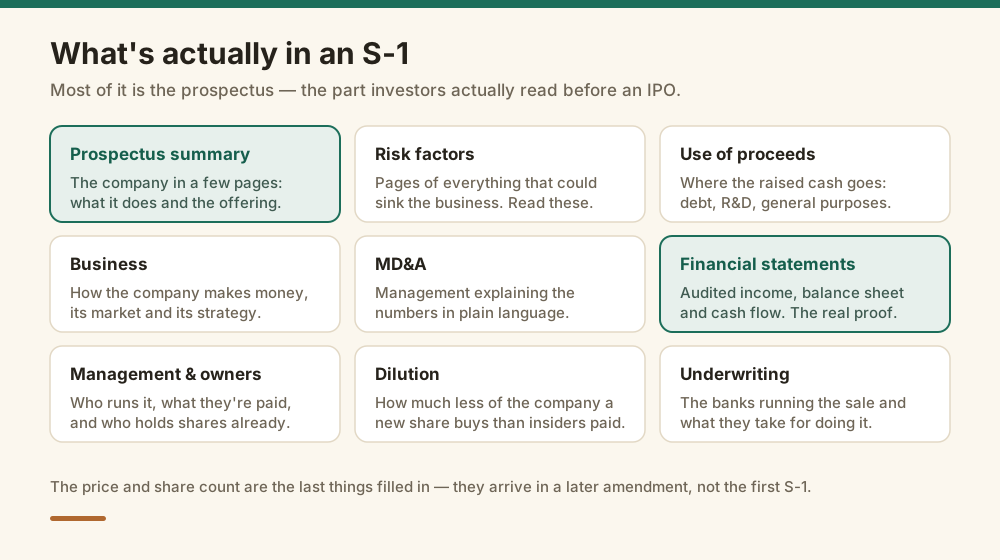
The prospectus summary is the company in a few pages: what it does and the shape of the offering. It is the fastest way to get oriented.
The risk factors are pages of everything that could sink the business, in the company's own words. For a young company, this section is gold, because it is where management has to admit the weaknesses it would never put in a pitch deck.
Use of proceeds tells you where the raised money is going. Paying down debt, funding growth, or, watch for this one, cashing out early investors. That single section tells you a lot about who the IPO is really for.
Then comes the business section, where the company explains how it actually makes money, and the MD&A, where management walks through the numbers in their own words. And finally the audited financial statements, the income statement, balance sheet, and cash flow, plus a dilution table showing how much less of the company a new share buys than the insiders paid.
One thing is deliberately missing from the first S-1, though: the price. The offering price and the exact number of shares are the last details filled in, and they show up later, in an amendment, not the initial filing.
How does the IPO process actually work?
Here is where a lot of people get the wrong idea. Filing the S-1 is the start of the process, not the end. It kicks off a back-and-forth with the SEC that plays out in public over weeks or months.
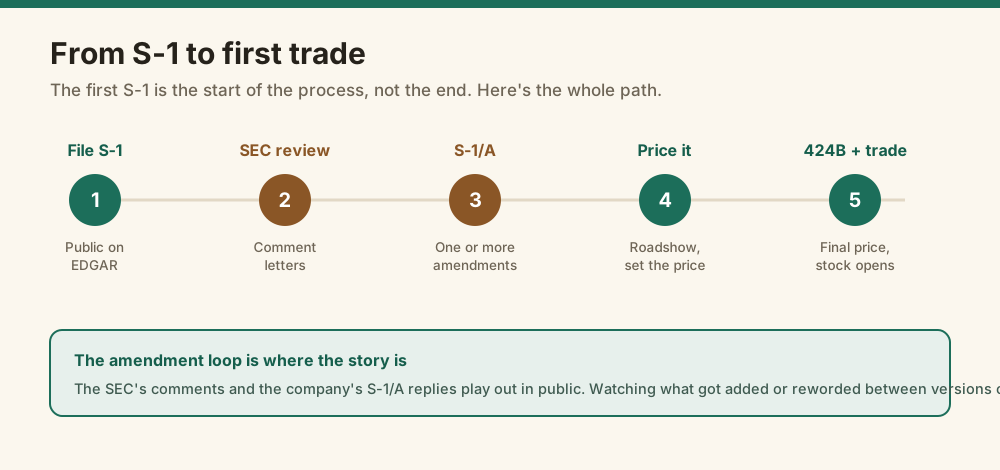
First the company files the original S-1. Then the SEC reviews it and sends back comment letters, questions and objections the company has to answer. The company responds by filing amended versions, called S-1/A. There can be several rounds of this.
Once the SEC is satisfied, the company runs a roadshow to gauge demand from big investors, then sets a price. At that point it files a final prospectus, called a 424B, which is basically the S-1 with the actual price and share count filled in. And then, finally, the stock starts trading.
Now, here is a tip most people miss. The amendment loop is the part worth watching. Because the SEC's questions and the company's answers show up as public filings, comparing what got added or reworded between the first S-1 and each S-1/A often tells you more than the polished final version does. If a risk factor suddenly grew three paragraphs, someone made the company spell it out.
S-1 vs 424B vs 10-K: what is the difference?
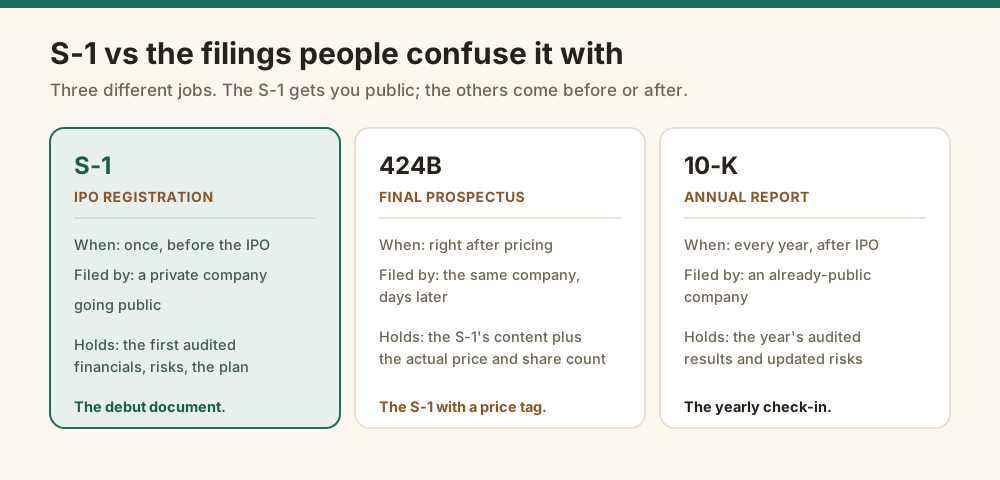
These three get confused because they all carry financials and read alike. But they do very different jobs, and the difference comes down to timing.
| Filing | What it is | When | Filed by |
|---|---|---|---|
| S-1 | IPO registration statement | Once, before the IPO | A private company going public |
| 424B | Final prospectus, with the price | Right after pricing | The same company, days later |
| 10-K | Annual report | Every year, after the IPO | An already-public company |
So put simply: the S-1 is the debut, the 424B is the S-1 with a price tag attached, and the 10-K is the yearly check-in once the company is public. If you are reading financials for a company that has not gone public yet, the S-1 is the only one of the three that even exists.
What does an S-1 actually tell you?
For a company that has been private for years, the S-1 is the first real look at the numbers. That makes it one of the most information-dense filings a company ever produces.
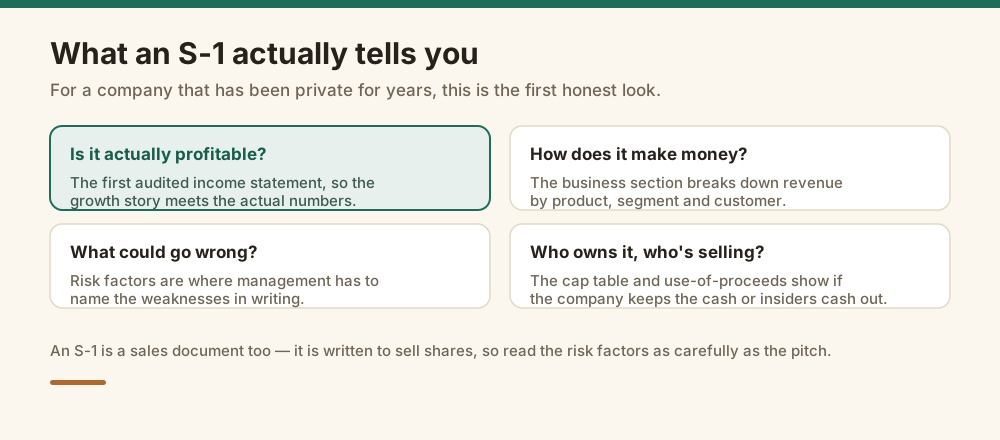
You can finally check whether the company is actually profitable, because the audited income statement is right there next to the growth story. A lot of hot IPOs turn out to be losing money fast once you read the actual statements.
The business section breaks revenue down by product and segment, so you see how the company really makes money rather than how it markets itself. The risk factors are where management has to name the weaknesses in writing. And the cap table plus the use of proceeds tell you whether the company is keeping the cash it raises to grow, or whether early insiders are cashing out on the way through the door.
One caveat worth holding onto, though. An S-1 is also a sales document. It is written to sell shares, so the framing leans optimistic. Read the risk factors as carefully as you read the pitch, because the truth of the business usually lives in the tension between the two.
Confidential filings and the JOBS Act
Here is a wrinkle worth knowing, because it explains why some IPOs seem to appear out of nowhere. Not every S-1 starts out public.
Under the JOBS Act, an "emerging growth company," which is basically a smaller, newer business, can file its S-1 confidentially with the SEC first, as a draft. That lets it start the review process and test the waters without showing its numbers to competitors or the press.
The catch is that it cannot stay hidden. Before the company can actually market the IPO to investors, it has to make that S-1 public, usually at least 15 days before the roadshow. So the secrecy is temporary. Sooner or later, if a company wants public money, it has to open its books to everyone, and that is the whole point of the S-1.
Red flags to watch for in an S-1
Since an S-1 is a sales document, the useful skill is knowing what to be skeptical about. A few things are worth checking every time.
Watch the use of proceeds. If a big chunk of the money is going to pay off early investors or founders instead of into the business, the IPO is partly an exit, not just a fundraise. That is not automatically bad, but you want to know it going in.
Watch for customer concentration in the risk factors. A company that earns most of its revenue from one or two customers is a single lost contract away from a very different story, and it has to disclose that dependence.
Watch the losses sitting next to the growth. Fast revenue growth is exciting, but flip to the cash flow statement and see how much money the company is burning to buy that growth. Some companies are one bad quarter away from needing to raise again.
And watch the share structure. Plenty of founders keep special "super-voting" shares that let them control the company while owning a minority of it. If that matters to you, it is right there in the S-1, spelled out in black and white.
How do you find and read S-1s?
Every S-1 is free and public on SEC EDGAR the moment it is filed, so you can always read one raw. You can also read the actual Form S-1 itself to see exactly what the SEC requires.
If you want to read one well, here is where I would start. Skip the glossy summary and go straight to two sections: the income statement in the financials, to see if the company makes money, and the use of proceeds, to see who the IPO is really for. Those two answer most of what matters before you get pulled in by the story.
One more habit worth building: read the very first risk factor. Companies tend to order their risks from most to least important, so the one sitting at the top is often the danger management itself considers the biggest. It is a fast way to find the single thing most likely to break the business, straight from the people who know it best.
Once a company goes public, it stops filing S-1s and starts filing the regular reports instead. That is where a tool becomes handy. The Superinvestors tracker lets you see what the big funds hold and follow them for free, and the companion guides on the 10-K, 8-K, Form 4, and 13F cover the filings a company produces after it is public. The guide to SEC filing types maps the whole set.
So once you know what an S-1 is, an IPO stops being a black box. You can read the same document the underwriters and the big investors read, weeks before the stock ever trades, and decide for yourself whether the story actually holds up against the numbers behind it.
Edgrapi surfaces public SEC filings for research. It is not investment advice, and an S-1 does not predict how an IPO will perform.
Frequently asked questions
What is an S-1 filing?
An S-1 is the registration statement a private company files with the SEC before it goes public. It contains the prospectus: the company's first audited financial statements, its risk factors, a description of the business, and how it plans to use the money it raises. The SEC reviews the S-1 before the company can sell any shares, and it is public on EDGAR the moment it is filed.
What is included in an S-1?
The core is the prospectus, which holds a summary, detailed risk factors, the use of proceeds, a business description, management's discussion and analysis (MD&A), two to three years of audited financial statements, details on management and existing owners, a dilution table, and the underwriting terms. The offering price and exact share count come later, in an amendment, not the first S-1.
What is the difference between an S-1 and a 10-K?
An S-1 is a one-time registration filed to go public; a 10-K is the annual report a company files every year after it is already public. The S-1 introduces a company to the market with its first audited numbers and a plan to raise money. The 10-K is the recurring yearly check-in on an established public company. Different job, different point in a company's life.
What is an S-1/A?
An S-1/A is an amendment to an S-1. After the SEC reviews the original filing it sends comment letters, and the company responds by filing amended versions. There are often several. Comparing what changed between the S-1 and each S-1/A, such as added risks or reworded disclosures, frequently tells you more than the first filing did.
What does an S-1 tell you about a company?
It is often the first honest look at a company that has been private for years. You get its first audited financials (so you can see whether it is actually profitable), a breakdown of how it makes money, the risks management is willing to put in writing, who owns it before the sale, and whether the company keeps the raised cash or insiders are cashing out.
Where can I find a company's S-1?
Every S-1 is free and public on SEC EDGAR the moment it is filed. You can read it raw, or use an API to pull the filing and its sections as structured data. Edgrapi's filings endpoint lists a company's filings by form, including the S-1 and its amendments, so you can track an IPO registration programmatically.