Why Insider Trading Is Illegal (And When It's Legal)
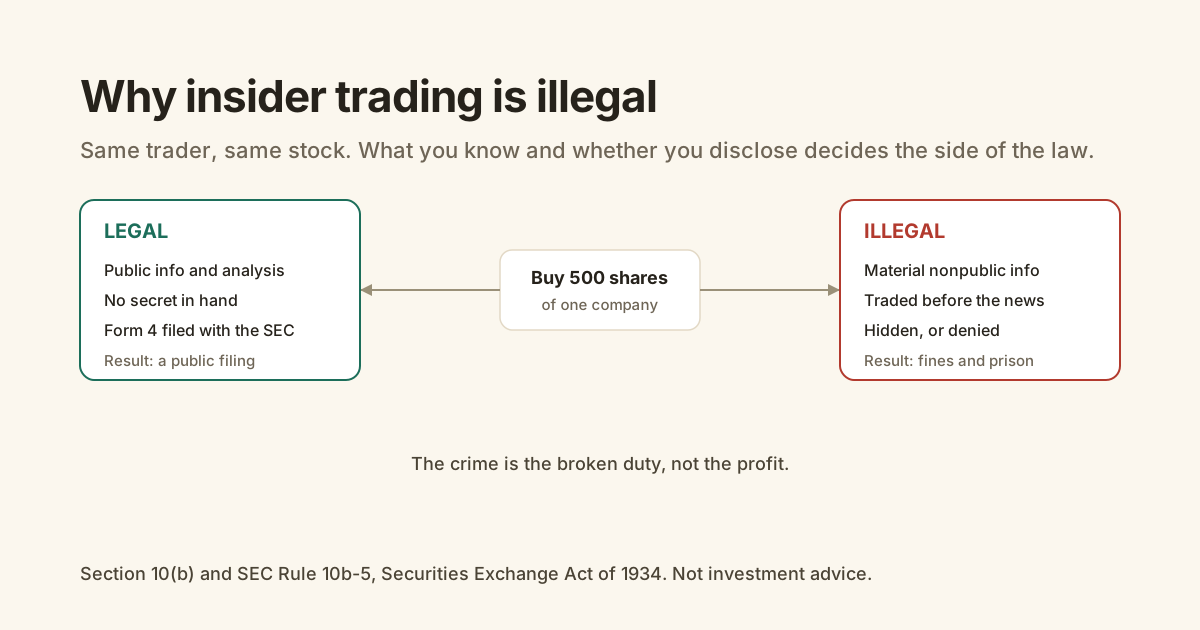
You can read a company's earnings, make a smart guess, and get rich. That is investing.
Do the same trade using a secret you were not supposed to have, and it is a federal crime.
That gap confuses a lot of people. Executives buy and sell their own stock all the time and nobody arrests them. So where is the line?
Why is insider trading illegal?
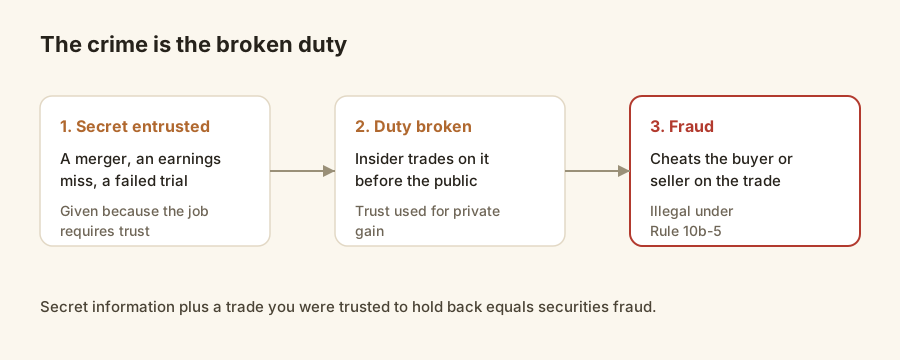
Insider trading is illegal because the law treats it as a form of fraud. When you trade on material nonpublic information you were trusted to protect, you cheat the person on the other side of the trade and break faith with whoever handed you the information. The rules come from Section 10(b) of the Securities Exchange Act of 1934 and SEC Rule 10b-5, which ban deception in securities trades. Neither one uses the words "insider trading."
So the ban was built by courts, case by case, out of a general anti-fraud rule.
Two ideas hold it together. The first is duty. A CEO, a lawyer, or an accountant gets secret information because their job requires trust, and using it to trade breaks that trust.
The second is fairness. Markets only work if buyers and sellers price stocks on public facts. Let a few people trade on secrets and everyone else is playing a rigged game.
The Legal Information Institute at Cornell frames it around that breach of duty, and it is the backbone of every case the SEC brings.
What counts as material nonpublic information?
Material nonpublic information is any fact that a reasonable investor would want before trading, and that the public does not have yet. Material means it could move the price: an earnings miss, a merger, a failed drug trial, the loss of a big customer. Nonpublic means it has not gone out through a filing, a press release, or a news report. When both are true, trading on it is where the trouble begins.
Materiality is the part people underestimate.
Courts treat information as material when a reasonable investor would think it matters to the decision to buy or sell. A pending acquisition is material. A rumor about the CEO's lunch order is not.
Nonpublic is about timing. The moment a fact is released to the market, it stops being inside information. You can trade on an earnings report the second it is public. You cannot trade on it an hour before.
Most legal trouble starts with one specific, price-moving fact that had not been announced yet.
What is the difference between legal and illegal insider trading?
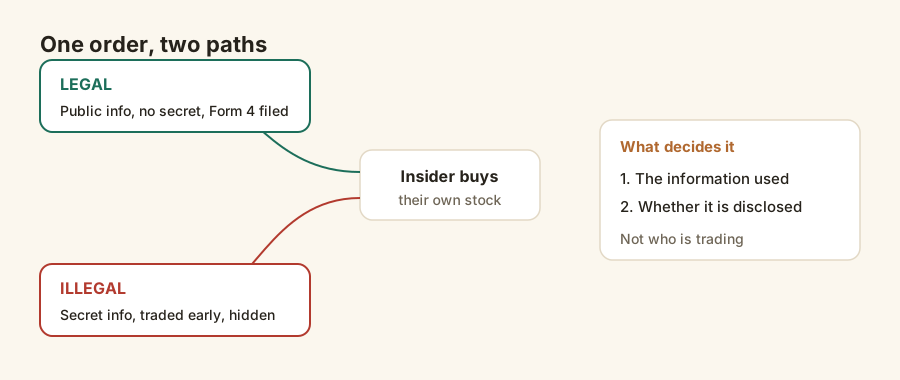
The difference is not who trades, it is what they know and whether they disclose. A CEO can legally buy her own stock, because she reports it to the SEC on Form 4 within two business days and is not sitting on secret information. The same CEO buying the day before a surprise acquisition she arranged, before telling the market, is trading illegally. Same person, same stock, opposite side of the law.
This is the point that surprises people: insiders trade constantly, and almost all of it is legal.
They follow the rules. They trade in open windows, not during blackout periods. They avoid trading when they hold secret information. And they file the paperwork that puts the trade on public record.
| Legal insider trading | Illegal insider trading | |
|---|---|---|
| Who trades | Officers, directors, employees, anyone | Officers, directors, employees, anyone |
| Information used | Public facts and their own analysis | Material nonpublic information |
| Disclosure | Reported to the SEC on Form 4 | Hidden, or the trade is denied |
| Timing | Open window, no secret in hand | Right before undisclosed news breaks |
| Example | A CFO buys after a public earnings call | A CFO buys before a secret merger is announced |
| Result | A public Form 4 filing | Fines, disgorgement, and possible prison |
The legal trades leave a trail you can read. Every one shows up as a Form 4 on the SEC's EDGAR system, which is why you can see exactly what insiders file without any secret at all.
Is it insider trading if you get a tip or overhear something?
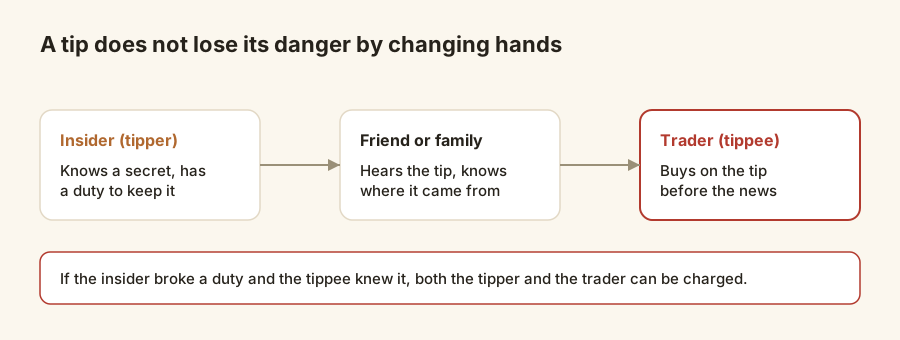
It can be, even if you do not work for the company. Under the misappropriation theory the Supreme Court upheld in United States v. O'Hagan (1997), you break the law by trading on secret information you had a duty to protect, no matter where you got it. Both the tipper and the person they tip can be liable when the tipper broke a duty and the tippee knew it. A fact you overheard with no duty attached sits in a grayer area.
The O'Hagan case is worth knowing. A lawyer traded on a client's secret takeover plan even though he did not work for the target company. The Court still held him liable, because he stole the information from his own law firm.
That is the trap most ordinary investors fall into: the friend or family tip.
Your cousin works at a biotech and tells you the trial failed before it is announced. If you trade on it, both of you can be charged. The SEC does exactly this. In August 2025 it charged a former board member, Ross Haghighat, for tipping family and friends about a $3.2 billion acquisition.
Reading public filings and news is not insider trading. Acting on a specific secret that someone leaked to you can be.
Real insider trading examples
The famous cases show the whole range: a lifestyle mogul who dodged a small loss, a hedge fund manager wired for sound, and a modern executive who bet on a rival. Here are five real examples, drawn from the SEC's own charges and court records, that map the line between a clean trade and a crime.
- Martha Stewart, ImClone (2001-2004). Stewart sold about 3,928 ImClone shares after a tip that the FDA would reject the company's cancer drug, dodging a loss of roughly $45,000. Here is the twist: she was never convicted of insider trading. A jury convicted her of obstruction of justice and lying to investigators, and she served about five months. The cover-up sank her, not the trade.
- Raj Rajaratnam, Galleon Group (2011). The hedge fund founder built a network of insiders at companies like IBM and Goldman Sachs and made more than $60 million in illegal profit. He got an 11-year prison sentence, the longest for insider trading at the time, and the SEC hit him with a record $92.8 million penalty. The FBI used wiretaps for the first time in an insider trading case to catch him.
- Matthew Panuwat, "shadow trading" (jury verdict 2024). A Medivation executive learned Pfizer would buy his company, then bought options in a competitor, Incyte, betting it would rise on the news. The SEC won a novel theory that trading a rival's stock on your own company's secret is still illegal. It stretched the law into new territory.
- Ryan Squillante (2025). A head of equity trading used confidential information about upcoming stock offerings to trade in at least 10 companies, earning about $216,965. He settled with the SEC for roughly $9.7 million in total, showing that the penalty routinely dwarfs the profit.
- Ross Haghighat, Chinook Therapeutics (2025). A former board member tipped his brother, stepdaughter, and friends about a $3.2 billion Novartis acquisition before it was public. It is the family-tip pattern that catches so many people who never worked in finance at all.
What happens if you get caught insider trading?
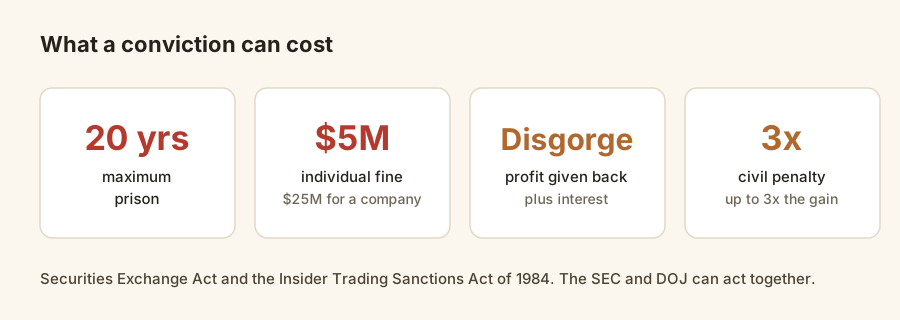
The penalties are heavy. A criminal conviction can bring up to 20 years in prison and a fine up to $5 million for an individual, or $25 million for a company, under the Securities Exchange Act. On the civil side, the SEC can claw back your profit and add a penalty of up to three times the money you made or the loss you avoided. You can face both at once.
The civil penalty is called treble damages, and it comes from the Insider Trading Sanctions Act of 1984.
Three times your gain is the ceiling on the penalty alone. On top of that, you give back the profit with interest, and a court can bar you from ever serving as an officer or director of a public company.
Enforcement is steady, not rare. The SEC brought 35 insider trading actions in fiscal 2024, about 6% of its enforcement cases, according to a review of SEC data by Fridman Fels & Soto. The agency also runs criminal referrals to the Department of Justice for the serious ones.
How does the SEC catch insider trading?
The SEC catches insider trading mostly through pattern detection. Market surveillance flags trades that happen right before big news, then investigators pull phone records, messages, brokerage accounts, and the public filing trail to connect a trader to a leak. In the Galleon case the FBI went further and used wiretaps for the first time in an insider trading investigation. Timing that looks too good is the thread they pull.
Exchanges and FINRA feed the SEC alerts about suspicious spikes in volume or options activity ahead of announcements.
Whistleblowers matter too. The SEC pays awards for tips that lead to enforcement, so colleagues and ex-partners have a reason to come forward.
There is an irony here. The legal disclosures that insiders are required to file create a clean public record, and that same record helps investigators spot the trades that do not add up.
How can you see legal insider trades?
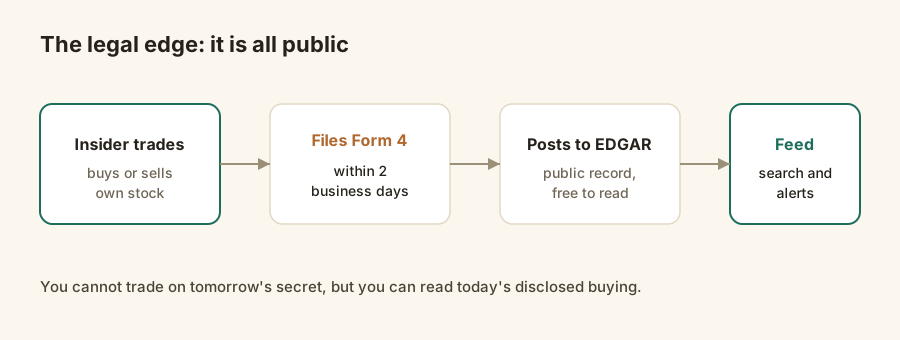
Every legal insider trade is public. Officers, directors, and owners of more than 10% of a company must file Form 4 with the SEC within two business days of buying or selling, and those filings post to EDGAR for anyone to read. That is how you can watch what executives do with their own money, in near real time, with no secret involved. Tools like Edgrapi turn that Form 4 stream into a clean feed you can search and get alerts from.
This is the honest edge that insider data actually offers.
You cannot legally trade on tomorrow's secret. But you can see today's disclosed buying, and clusters of insiders buying their own stock have long interested investors.
The same idea covers politicians. The 2012 STOCK Act requires members of Congress to disclose their trades, so you can track congressional stock trades from the public record as well.
Reading these filings is the legal version of the thing everyone is curious about. If you want to follow insider buying or watch the insider buy radar, you are working from data the whole market can see.
How to stay on the right side of the line
The rule that keeps you safe is short: never trade on a specific secret you were trusted to keep. Public earnings, filings, news, and your own analysis are all fair game. A tip from a friend who works at the company is not.
That is the whole reason insider trading is illegal. It turns an ordinary trade into a broken promise, and it robs the person on the other side of a fair price.
So use the legal version. Read the Form 4 filings, follow the disclosed buying, and trade on what the whole market can see.
Frequently asked questions
Is it insider trading if I overhear a stock tip and buy?
Maybe. If the tip is material nonpublic information that came from someone who broke a duty to keep it secret, and you knew that, trading on it can be illegal even though you do not work for the company. A fact you overheard with no duty attached is a grayer area. Trading on public news or filings is always fine.
Was Martha Stewart convicted of insider trading?
No. Martha Stewart sold ImClone stock in 2001 after a tip, but she was never convicted of insider trading itself. In 2004 a jury found her guilty of obstruction of justice and lying to investigators about the sale, and she served about five months in prison. The cover-up, not the trade, is what put her away.
Is congressional stock trading insider trading?
Not automatically. Members of Congress can legally trade stocks, but the 2012 STOCK Act bars them from trading on nonpublic information they get through their work, and requires them to disclose trades publicly. Critics argue the rules are weakly enforced. Because the disclosures are public, you can track what politicians buy and sell.
Can you go to jail for insider trading?
Yes. Illegal insider trading is a federal crime that can carry up to 20 years in prison and a criminal fine up to $5 million for an individual, under the Securities Exchange Act. Most cases settle with civil penalties instead, but serious ones, like the Galleon hedge fund scheme, have ended in long prison sentences.
What is material nonpublic information?
Material nonpublic information is any fact that could move a stock's price and has not been released to the public yet. Examples include an upcoming merger, an earnings surprise, a failed drug trial, or the loss of a major customer. Once the information is public, through a filing, press release, or news story, trading on it is no longer insider trading.
How can I see what company executives are buying legally?
Company insiders must report every trade to the SEC on Form 4 within two business days, and those filings are public on EDGAR. You can read them directly or use a tracker that turns the Form 4 stream into a searchable feed with alerts. Following legal, disclosed insider buying is one of the few ways to use insider activity without breaking any law.